| Code | Date | Format | Currency | Team of 10 Per Person* |
Team of 7 Per Person* |
Early Bird Fee Per Person |
Normal Fee Per Person |
|---|---|---|---|---|---|---|---|
| PD982 | 25 - 28 Jan 2027 | Kuala Lumpur, Malaysia | SGD | 3,689 | 3,525 | 3,999 | 4,099 |
| PD982 | 25 - 28 Jan 2027 | Kuala Lumpur, Malaysia | USD | 2,969 | 2,837 | 3,099 | 3,299 |
*Fee per person in a team of 7 or 10 participating from the same organisation, registering 6 weeks before the course dateRequest for a quote if you have different team sizes, content customisation, alternative dates or course timing requirements Request for in-person classroom training or online (VILT) training format
Learn in teams and save more! Enjoy group discounts of up to 50% off normal fees for team based learning. Contact us on [email protected] to learn more today!
Code
PD982Date
25 - 28 Jan 2027Format
Kuala Lumpur, MalaysiaCurrency
SGDTeam of 10
Per Person*
3,689
Team of 7
Per Person*
3,525
Early Bird Fee
Per Person
3,999
Normal Fee
Per Person
4,099
Code
PD982Date
25 - 28 Jan 2027Format
Kuala Lumpur, MalaysiaCurrency
USDTeam of 10
Per Person*
2,969
Team of 7
Per Person*
2,837
Early Bird Fee
Per Person
3,099
Normal Fee
Per Person
3,299
*Fee per person in a team of 7 or 10 participating from the same organisation, registering 6 weeks before the course dateRequest for a quote if you have different team sizes, content customisation, alternative dates or course timing requirements Request for in-person classroom training or online (VILT) training format
About this Training Course
This 4-day LNG Supply Chain, Regasification, and Terminal Operations course is designed to provide energy professionals with a comprehensive understanding of the LNG supply chain—from upstream supply and transportation, to regasification and downstream integration. As global demand for LNG continues to grow, fuelled by its role in energy transition and diversification, there is a critical need for technically competent professionals who can manage, operate, and optimize LNG infrastructure safely and efficiently.
Through an in-depth exploration of LNG carriers, floating and onshore regasification terminals, port and marine operations, and the transmission pipeline network, participants will develop a holistic understanding of the LNG ecosystem. The course also covers crucial commercial and contractual aspects, such as sourcing strategies, market mechanisms, and geopolitical considerations. Environmental regulations, risk management, and safety standards for terminal operations are emphasized to ensure compliance and resilience in high-risk LNG operations.
After the completion of this training course, participants will be able to:
- Understand the design, systems, and operational practices of LNG carriers, including STS transfers and propulsion technologies
- Identify major global LNG suppliers and evaluate sourcing options, contracts, and pricing mechanisms
- Comprehend offloading operations and the functionality of FSUs and FSRUs in the LNG supply chain
- Differentiate between floating and onshore regasification technologies, systems, and integration with pipelines
- Design considerations for onshore LNG terminals including storage, regasification units, and utility systems
- Recognize key marine and port operations essential for LNG terminal safety and traffic control
- Apply safety regulations, environmental standards, and risk assessment methodologies relevant to LNG operations
- Understand natural gas transmission infrastructure from regasification terminals to end-users
This course is ideally suited for professionals involved in LNG terminal operations, maritime logistics, supply sourcing, and infrastructure development within the natural gas sector. It is also valuable for those seeking a deeper technical and commercial understanding of the LNG value chain. The course will benefit but is not limited to:
- Operations, Project, and Process Engineers involved in LNG terminal design and operation
- Marine and Port Authority Personnel, Pilots, and Tug Operators
- Energy Procurement, Sourcing, and LNG Trading Specialists
- Terminal and Facility Managers overseeing FSUs, FSRUs, or onshore regasification units
- Health, Safety, Environment (HSE) Professionals and Risk Management Practitioners
- Pipeline Transmission Engineers and Midstream Infrastructure Planners
- Government or regulatory bodies involved in LNG infrastructure approvals and policy
- Intermediate
- Advanced
This training incorporates a blended learning approach combining technical lectures, interactive discussions, and case-based learning. Real-world examples, project case studies, and operational scenarios will be used to contextualize the theoretical elements of LNG supply chain and terminal operations.
Unlock the potential of your workforce with customized in-house training programs designed specifically for the energy sector. Our tailored, in-house courses not only enhance employee skills and engagement but also offer significant cost savings by eliminating travel expenses. Invest in your team’s success and achieve specific outcomes aligned with your organization’s goals through our expert training solutions. Request for further information regarding our on-site or in-house training opportunities.
In our ongoing commitment to sustainability and environmental responsibility, we will no longer providing hard copy training materials. Instead, all training content and resources will be delivered in digital format. Inspired by the oil and energy industry’s best practices, we are leveraging on digital technologies to reduce waste, lower our carbon emissions, ensuring our training content is always up-to-date and accessible. Click here to learn more.



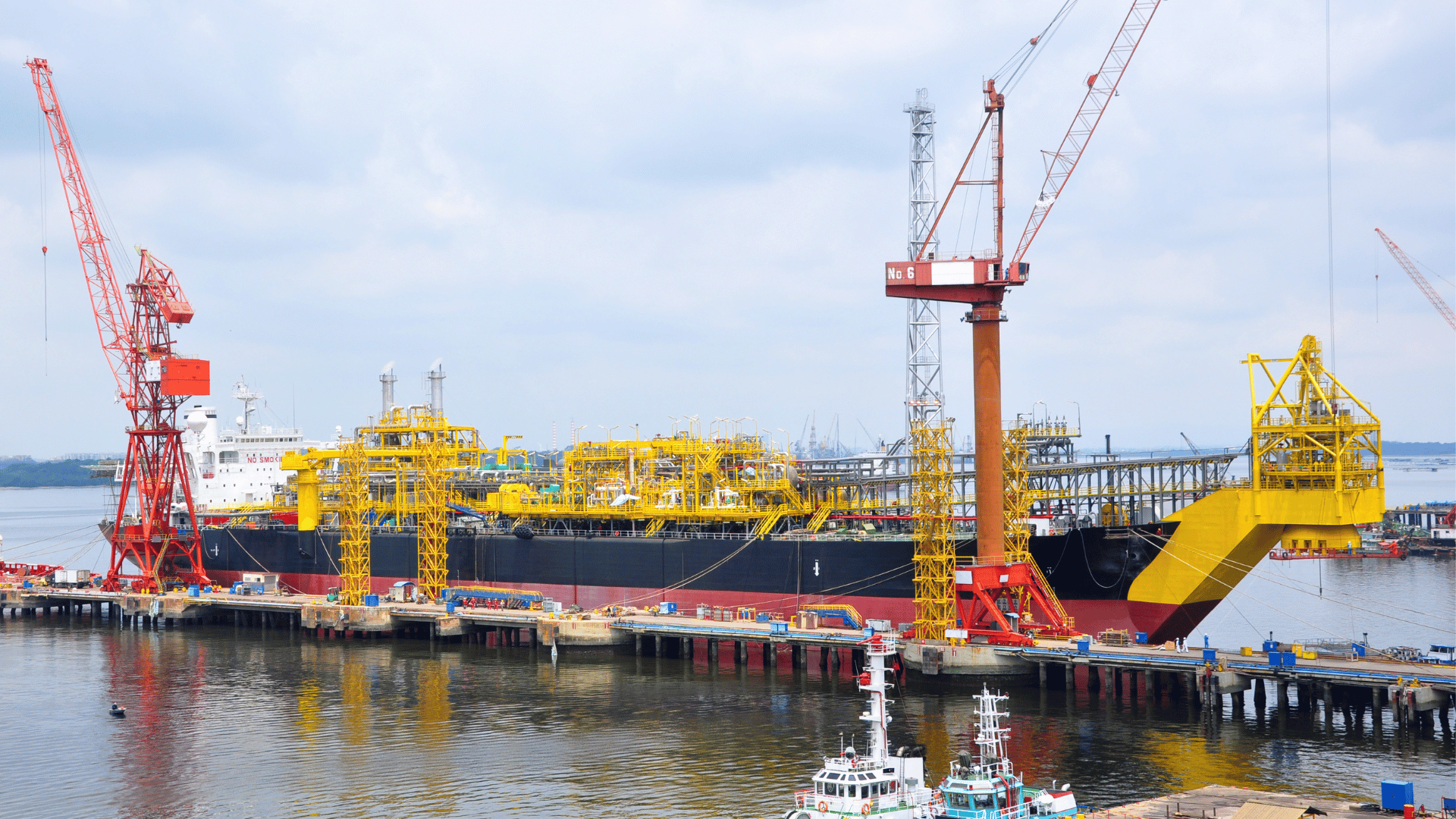
Regasification converts LNG back into natural gas so pipelines and end users can consume it. The terminal warms LNG from cryogenic temperature and controls outlet pressure and temperature. Operators then meter the gas at custody transfer and manage quality to meet pipeline specifications. Regasification links LNG shipping to downstream demand such as power plants, industrial customers, and city-gas networks.
An LNG receiving terminal supports LNG Supply Chain Regasification and Terminal Operations by managing the steps between LNG carrier arrival and pipeline send-out. The vessel berths and connects to loading arms or hoses. Operators cool down lines to prevent thermal shock and transfer LNG to storage tanks or an FSRU. Vaporizers then warm LNG and convert it into gas. The terminal measures flow, controls pressure, and manages gas quality before pipeline delivery.
Open Rack Vaporizers (ORV) use seawater and deliver high efficiency, but they can affect local seawater temperature and require reliable intake systems. Submerged Combustion Vaporizers (SCV) burn fuel gas and provide flexibility, but they increase emissions and operating cost. Intermediate Fluid Vaporizers (IFV) use a heat-transfer fluid to improve stability and reduce icing risk under some conditions. Site constraints and permits often drive selection.
BOG forms when heat enters LNG during storage, transfer, or tank operations. Terminals control BOG to avoid overpressure, reduce product loss, and limit methane emissions. They typically compress BOG for use as fuel gas or send it into the gas system. Some facilities add re-liquefaction or dedicated power generation options. Good BOG management improves reliability during cooldown, transfer, and low-demand periods.
Terminals use Emergency Shut Down (ESD) systems to stop transfer quickly and isolate equipment. Fire and gas detection systems identify leaks and ignition hazards early. Emergency release systems protect loading arms if vessel movement creates unsafe loads. Operators also enforce exclusion zones, marine procedures, and competency requirements. These layers reduce escalation risk during abnormal events and support rapid emergency response.
A QRA estimates both the likelihood and consequences of credible accident scenarios. It typically evaluates LNG releases, vapor dispersion, pool fires, jet fires, and explosions. Engineers use the findings to set safety distances, optimize layout, and specify protection systems. Regulators and stakeholders often rely on QRA outputs during permitting and safety case reviews. The process helps teams select controls that reduce risk to acceptable levels.
Regas terminals manage seawater intake and discharge impacts when they use ORV or IFV systems. They also control noise, lighting, and water treatment practices. Emissions can come from fuel gas use, flaring, and BOG handling. Operators reduce impacts through monitoring, optimized operations, and methane management programs. Permits often define limits for thermal discharge, chemical dosing, and air emissions.
Learn what past participants have said about EnergyEdge training courses
The best feature of the training is the trainers’ experience and in-depth knowledge. They bring a wealth of expertise to the sessions.
Senior Engineer, TNB Genco
This course enables me to enhance my knowledge of LNG and regasification.
Senior Engineer, TNB Genco
Related Courses