| Code | Date | Format | Currency | Team of 10 Per Person* |
Team of 7 Per Person* |
Early Bird Fee Per Person |
Normal Fee Per Person |
|---|---|---|---|---|---|---|---|
| PE2358 | 24 - 28 May 2027 | Kuala Lumpur, Malaysia | SGD | 3,955 | 4,139 | 4,399 | 4,599 |
| PE2358 | 24 - 28 May 2027 | Kuala Lumpur, Malaysia | USD | 3,267 | 3,419 | 3,599 | 3,799 |
| PE2359 | 11 - 15 Oct 2027 | Kuala Lumpur, Malaysia | SGD | 3,955 | 4,139 | 4,399 | 4,599 |
| PE2359 | 11 - 15 Oct 2027 | Kuala Lumpur, Malaysia | USD | 3,267 | 3,419 | 3,599 | 3,799 |
*Fee per person in a team of 7 or 10 participating from the same organisation, registering 6 weeks before the course dateRequest for a quote if you have different team sizes, content customisation, alternative dates or course timing requirements Request for in-person classroom training or online (VILT) training format
Learn in teams and save more! Enjoy group discounts of up to 50% off normal fees for team based learning. Contact us on [email protected] to learn more today!
Code
PE2358Date
24 - 28 May 2027Format
Kuala Lumpur, MalaysiaCurrency
SGDTeam of 10
Per Person*
3,955
Team of 7
Per Person*
4,139
Early Bird Fee
Per Person
4,399
Normal Fee
Per Person
4,599
Code
PE2358Date
24 - 28 May 2027Format
Kuala Lumpur, MalaysiaCurrency
USDTeam of 10
Per Person*
3,267
Team of 7
Per Person*
3,419
Early Bird Fee
Per Person
3,599
Normal Fee
Per Person
3,799
Code
PE2359Date
11 - 15 Oct 2027Format
Kuala Lumpur, MalaysiaCurrency
SGDTeam of 10
Per Person*
3,955
Team of 7
Per Person*
4,139
Early Bird Fee
Per Person
4,399
Normal Fee
Per Person
4,599
Code
PE2359Date
11 - 15 Oct 2027Format
Kuala Lumpur, MalaysiaCurrency
USDTeam of 10
Per Person*
3,267
Team of 7
Per Person*
3,419
Early Bird Fee
Per Person
3,599
Normal Fee
Per Person
3,799
*Fee per person in a team of 7 or 10 participating from the same organisation, registering 6 weeks before the course dateRequest for a quote if you have different team sizes, content customisation, alternative dates or course timing requirements Request for in-person classroom training or online (VILT) training format
About this Training Course
This five-day course provides an integrated approach to Improved Oil Recovery (IOR) strategies for mature oil fields, focusing on how petroleum professionals can address production decline, increasing water cuts, reservoir heterogeneity, well placement challenges, flow assurance issues, ageing infrastructure, and economic constraints. It covers the mature oil-field lifecycle, Field Development Plans (FDP), artificial lift selection, reservoir characterization, waterflooding, gas reinjection, surveillance, production optimization, and field development strategies.
A major focus is the practical application of IOR and EOR techniques. Participants examine artificial lift methods including gas lift and various pumping systems, water and gas injection patterns, Voidage Replacement Ratio (VRR), Production Logging Tools (PLT), smart wells, continuous monitoring, waterflooding problems, flow assurance, and EOR screening. Chemical, gas, thermal, and advanced EOR techniques are examined through actual field cases, including Tapis in Malaysia, Wellman in Texas, Changqing in China, and other international oil-field examples.
The course also addresses reservoir simulation, economic evaluation, and future approaches to mature-field management. Participants are introduced to industry simulators including E100 and E300, simulation study workflows, cost-benefit analysis, financial modelling, digital transformation, automation, remote operations, digital twins, AI, predictive analytics, and long-term sustainability considerations. The learning is supported by in-class exercises, actual field data, industry videos, technical publications, and analysis of mature oil-field cases.
By the end of the course, participants will be able to:
- Develop integrated IOR strategies for mature oil fields by evaluating production decline, reservoir characteristics, well placement, water cut, infrastructure conditions, and economic constraints.
- Select and optimize appropriate artificial lift, waterflooding, and gas-injection strategies using screening criteria, actual well data, injection patterns, and Voidage Replacement Ratio (VRR) analysis.
- Apply reservoir surveillance and diagnostic techniques including Production Logging Tools (PLT), smart-well concepts, continuous monitoring, and waterflood surveillance to identify production and injection problems.
- Screen and evaluate appropriate EOR techniques including chemical, gas, thermal, and advanced EOR methods using technical criteria such as mobility ratio and capillary number, supported by actual field cases.
- Evaluate technical and economic options for mature-field optimization using reservoir simulation concepts, E100/E300 simulator applications, cost-benefit analysis, financial modelling, and future technologies such as digital twins, AI, predictive analytics, automation, and remote operations.
This course is designed for oil and gas professionals involved in the development, production, management, optimization, and economic evaluation of mature oil fields. It is particularly relevant for professionals who need to make technical or management decisions concerning declining production, artificial lift, waterflooding, gas injection, reservoir surveillance, EOR selection, field optimization, and extending the productive life of existing assets.
- Petroleum Engineer
- Production Engineer
- Field Development Engineer
- Reservoir Management Engineer
- Well Completion Engineer
- Artificial Lift Engineer
- Production Optimization Engineer
- Field Development Planner
- Reservoir Management Team Leader
- Petroleum Engineering Manager
- Production Manager
- Operations Manager
- Field Project Manager
- Asset Manager
- Operation and Maintenance Engineer
- Facilities Engineer
- Processing Engineer
- Business Development Professional involved in oil and gas projects
- Intermediate
- Advanced
The course combines lectures, interactive discussions, practical exercises, scenario-based workshops, actual field-data analysis, case studies, industry videos, and technical publications. Participants apply screening criteria to actual wells and oil fields, perform artificial lift and VRR exercises, examine EOR applications, review reservoir simulator selection, and analyze mature-field case studies. The combination of technical concepts and practical exercises enables participants to relate IOR, EOR, reservoir management, production optimization, and economic evaluation concepts to real oil-field applications.
Your expert course leader is a Senior Consultant, Certified Trainer and Professor of Petroleum Engineering with more than 25 years of experience spanning petroleum engineering, technical consultancy, academic research and professional training. He has also served as a consultant and certified instructor with NExT-Schlumberger (SLB), strengthening his practical industry and professional training credentials.
His expertise covers reservoir engineering, mature-field development and production optimisation, including reservoir characterisation, artificial lift, waterflooding, enhanced oil recovery (EOR), CO₂ flooding, steam and chemical flooding, horizontal wells and reservoir simulation. His technical work has addressed areas such as gas-lift and sucker-rod optimisation, ASP flooding, steam injection, CO₂ miscible flooding, heterogeneous carbonate reservoirs, and the management of asphaltene and sulphur deposition.
He has undertaken consultancy, research and professional training assignments involving major international operators and national oil companies, including Petroleum Development Oman (PDO), ADNOC/ADCO and ZADCO in the UAE, ONGC and Cairn Energy in India, and Occidental Petroleum (OXY). His project and consulting experience spans the USA, Australia, Egypt, Algeria, the UAE and other international oil and gas markets.
He is the author of two books and has published numerous scientific and technical papers in leading journals and international conferences. He has also served as a technical editor and reviewer for respected petroleum engineering publications, including the SPE Journal, SPE Reservoir Evaluation & Engineering, Journal of Petroleum Science and Engineering and Petroleum Science and Technology.
Alongside his academic and consulting work, he has designed and delivered more than 112 petroleum engineering courses for academic and industry professionals. His training portfolio includes Enhanced Oil Recovery, Applied Reservoir Engineering, Waterflooding Management and CCUS, with programmes delivered across Asia, the Middle East, Africa, Australia and the Americas, including Malaysia, Indonesia, Singapore, the UAE, Oman, Australia, China and India.
Unlock the potential of your workforce with customized in-house training programs designed specifically for the energy sector. Our tailored, in-house courses not only enhance employee skills and engagement but also offer significant cost savings by eliminating travel expenses. Invest in your team’s success and achieve specific outcomes aligned with your organization’s goals through our expert training solutions. Request for further information regarding our on-site or in-house training opportunities.
In our ongoing commitment to sustainability and environmental responsibility, we will no longer providing hard copy training materials. Instead, all training content and resources will be delivered in digital format. Inspired by the oil and energy industry’s best practices, we are leveraging on digital technologies to reduce waste, lower our carbon emissions, ensuring our training content is always up-to-date and accessible. Click here to learn more.
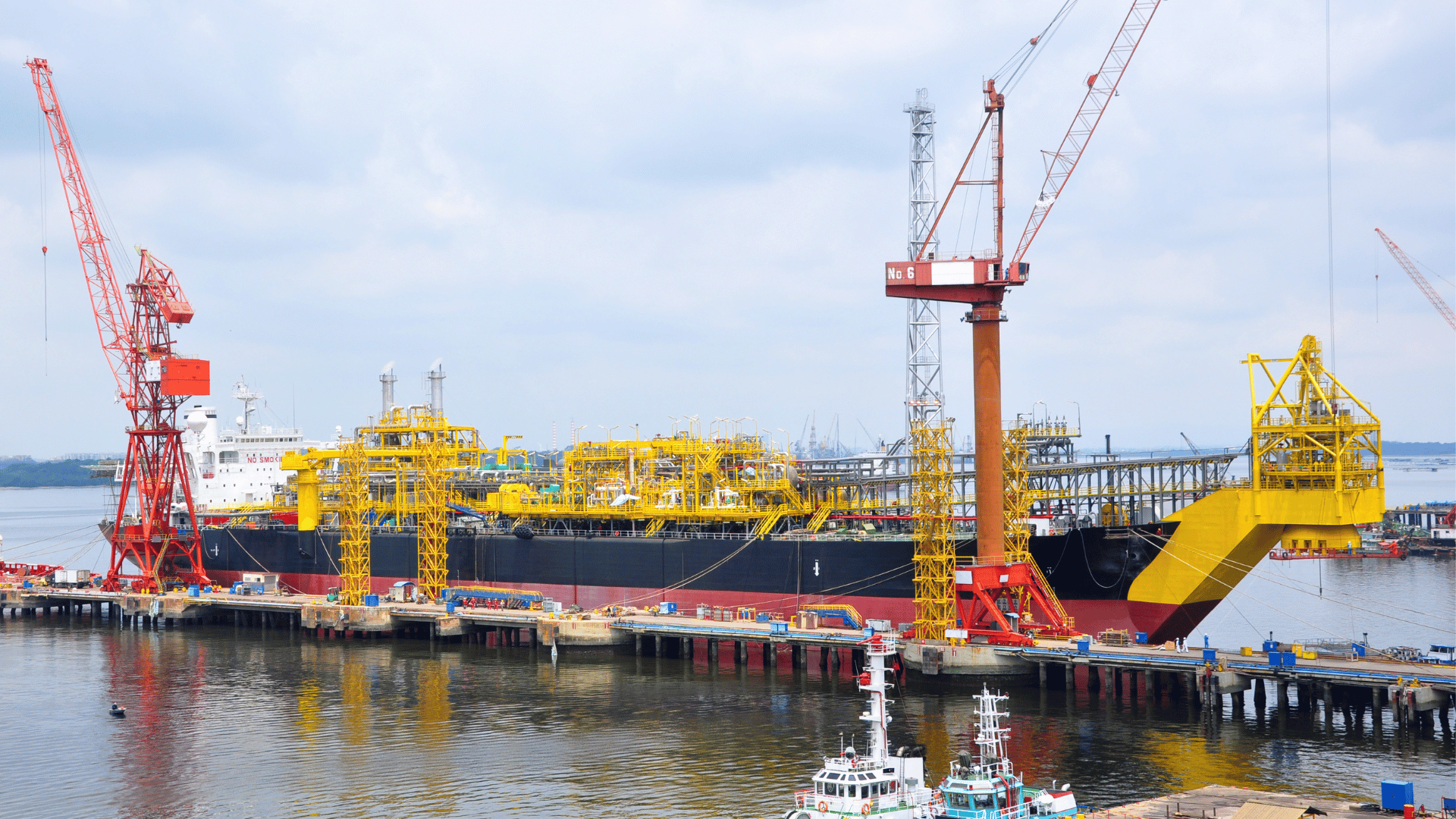
Improved Oil Recovery (IOR) includes the methods operators use to increase production from mature oil fields. For example, they may improve well performance, optimise water injection, and monitor reservoir behaviour. As a result, operators can recover more oil and extend field life. IOR also helps companies manage declining production and rising water production.
IOR covers all activities that improve oil recovery from an existing field. These activities include reservoir management, artificial lift, and production optimisation. In contrast, Enhanced Oil Recovery (EOR) focuses on advanced recovery methods such as gas injection, chemical flooding, and thermal recovery. Therefore, EOR often forms part of a broader IOR strategy.
Mature oil fields often experience lower production rates and higher water production. In addition, ageing facilities and complex reservoir conditions can affect performance. As these challenges grow, operators must improve field management and evaluate new recovery opportunities. This approach supports successful Improved Oil Recovery projects.
Artificial lift helps wells produce when reservoir pressure drops. Common methods include gas lift, sucker rod pumps, electric submersible pumps (ESP), and progressive cavity pumps (PCP). Operators choose a lift method based on well conditions and production goals. As a result, they can increase production and improve well performance.
Waterflooding helps maintain reservoir pressure and move oil toward producing wells. Therefore, it remains one of the most common recovery methods in mature oil fields. Operators also use monitoring data to improve injection performance. This process helps increase oil recovery and supports longer field life.
VRR compares the volume of injected fluids with the volume of produced fluids. Operators use this value to track injection performance. For example, they can identify whether injection rates support reservoir pressure. Consequently, VRR helps teams optimise waterflood and gas injection programmes and improve recovery results.
Engineers evaluate reservoir conditions, fluid properties, recovery goals, and project costs. Next, they compare different EOR options such as chemical, gas, and thermal methods. They may also perform laboratory tests and pilot projects. This step helps them select the most effective recovery solution and supports long-term Improved Oil Recovery.
Related Courses