About this Training Course
The successful deployment of carbon capture, utilisation, and storage (CCUS) projects depends on more than the performance of capture technology alone. Project viability is often determined by the effective integration of capture, conditioning, transport, storage, safety, regulatory requirements, commercial considerations, and long-term operational strategy across the entire value chain.
This three-day professional training programme provides participants with a practical understanding of how transport and storage considerations influence project feasibility, cost, risk, scalability, and investment decisions. The programme combines classroom-based learning with a site visit to Technology Centre Mongstad (TCM), allowing participants to connect theory with observations from the world’s largest carbon capture technology test facility.
The course focuses on systems integration and project decision-making rather than detailed pipeline engineering design calculations or specialist reservoir modelling.
Upon completion of the programme, participants will be able to:
- Understand the role of transport and storage within integrated CCUS systems
- Compare alternative CO₂ transport concepts, including pipeline and shipping solutions
- Recognise the importance of CO₂ quality, impurities, and conditioning requirements
- Understand key safety, integrity, and flow assurance considerations
- Identify major technical, commercial, regulatory, and environmental risks
- Evaluate transport and storage concepts for industrial hubs and cluster developments
- Understand major cost drivers and economic trade-offs across the CCUS value chain
- Apply lessons from operating facilities to future project development
- Develop and defend a transport and storage strategy for a practical CCUS development scenario
This course is designed for:
- Pipeline and subsea engineers
- Process and flow assurance engineers
- Project managers and development engineers
- Technical and commercial professionals involved in CCUS projects
- Regulators and policy advisors
- Energy transition professionals
- Environmental and sustainability professionals
- Hydrogen and low-carbon infrastructure developers
- Intermediate
The course is delivered through a blended and practical approach combining instructor-led sessions with interactive discussions and real-world case examples. Participants explore key concepts through classroom-based learning focused on CCUS systems and project decision-making. The programme includes case-based discussions and a hands-on team workshop, where participants develop and present a CO₂ transport and storage strategy for a realistic scenario. A key feature is the site visit to Technology Centre Mongstad (TCM), enabling experiential learning through structured observation and guided reflection. This integrated approach ensures strong understanding and practical application.
Unlock the potential of your workforce with customized in-house training programs designed specifically for the energy sector. Our tailored, in-house courses not only enhance employee skills and engagement but also offer significant cost savings by eliminating travel expenses. Invest in your team’s success and achieve specific outcomes aligned with your organization’s goals through our expert training solutions. Request for further information regarding our on-site or in-house training opportunities.
In our ongoing commitment to sustainability and environmental responsibility, we will no longer providing hard copy training materials. Instead, all training content and resources will be delivered in digital format. Inspired by the oil and energy industry’s best practices, we are leveraging on digital technologies to reduce waste, lower our carbon emissions, ensuring our training content is always up-to-date and accessible. Click here to learn more.



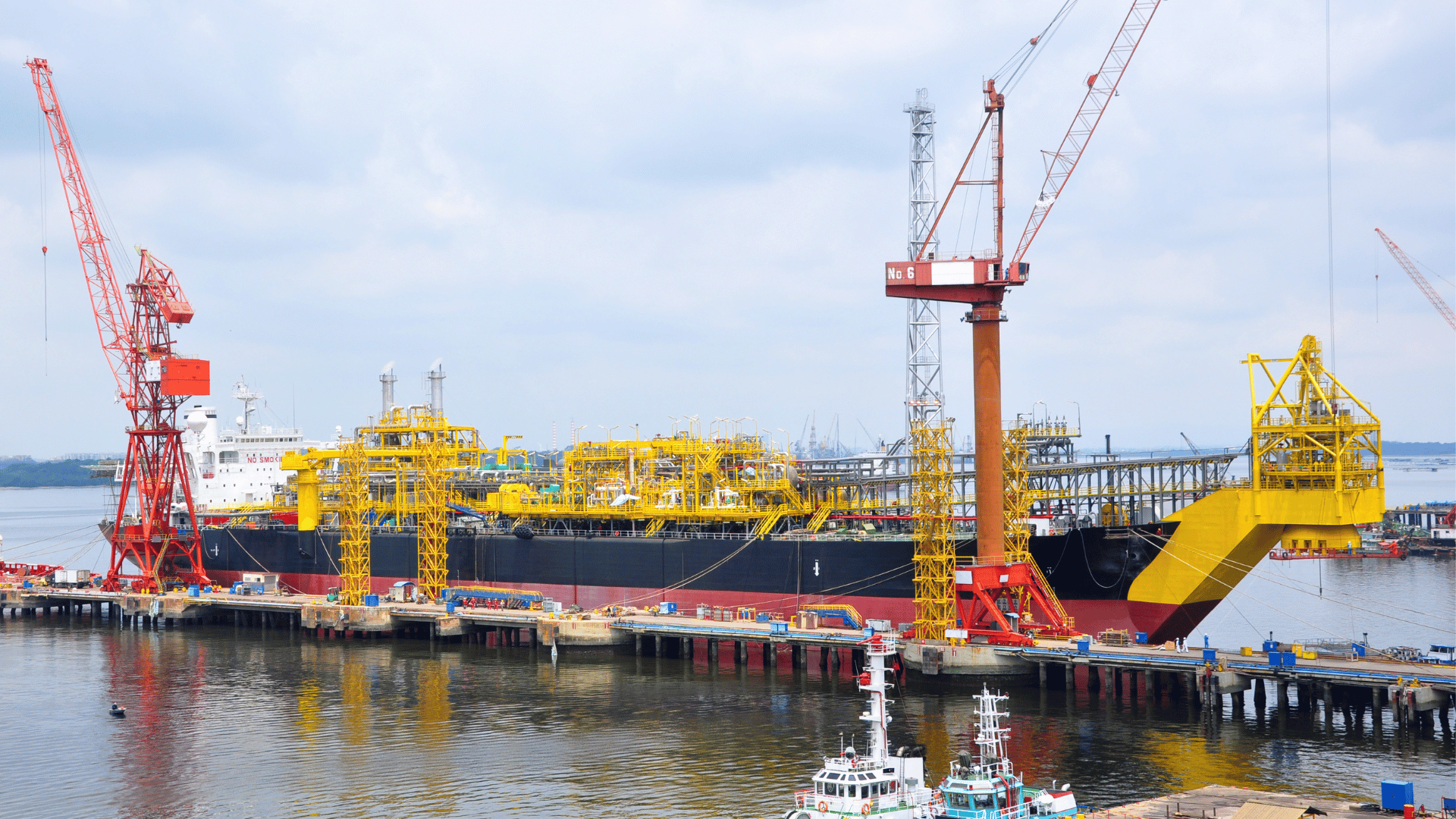
CO₂ transport and storage refer to the movement and long-term containment of captured carbon dioxide. First, operators compress and condition the CO₂ after capture. Then, they transport it via pipelines or ships to designated storage locations. Finally, engineers inject the CO₂ into deep underground formations. As a result, CO₂ transport and storage play a critical role in reducing industrial emissions and supporting carbon reduction strategies.
Generally, companies use pipelines and shipping for CO₂ transport and storage. For instance, pipelines allow continuous and cost-efficient transport over shorter distances. In contrast, shipping provides flexibility for offshore or long-distance projects. In some cases, developers combine both methods with intermediate storage to optimise logistics. Therefore, the choice depends on project scale, distance, and infrastructure availability.
CO₂ quality directly impacts the safety and efficiency of transport and storage systems. For example, impurities such as water or sulfur compounds can cause corrosion and damage infrastructure. To address this, engineers remove contaminants through conditioning processes like dehydration. Moreover, high-quality CO₂ ensures stable flow and protects pipelines and storage sites. Consequently, proper quality control reduces risks and improves system reliability.
CO₂ transport and storage systems typically use geological formations such as depleted oil and gas fields and deep saline aquifers. On one hand, depleted reservoirs offer known performance and existing infrastructure. On the other hand, saline formations provide large storage capacity for long-term use. Additionally, projects may use either onshore or offshore sites depending on regulatory and economic factors. Thus, storage selection depends on safety, capacity, and location.
Several challenges influence CO₂ transport and storage projects. First, high capital costs and regulatory complexity can slow development. Next, technical issues such as corrosion and flow assurance require careful engineering. Furthermore, long-term liability and environmental concerns add uncertainty. However, strong planning and risk management strategies can help organisations overcome these barriers and improve project outcomes.
Transport and storage decisions significantly shape the economics of CCUS projects. For example, infrastructure investments—including pipelines, compressors, and storage facilities—represent major costs. Meanwhile, the choice between pipeline and shipping options affects both capital and operating expenses. Therefore, integrated planning helps optimise costs and improve scalability. In turn, this strengthens the overall feasibility of CO₂ transport and storage systems.
Related Courses