| Code | Date | Format | Currency | Team of 10 Per Person* |
Team of 7 Per Person* |
Early Bird Fee Per Person |
Normal Fee Per Person |
|---|---|---|---|---|---|---|---|
| PD940 | 28 - 30 Sep 2026 | Kuala Lumpur, Malaysia | SGD | 3,353 | 3,509 | 3,699 | 3,899 |
| PD940 | 28 - 30 Sep 2026 | Kuala Lumpur, Malaysia | USD | 2,665 | 2,789 | 2,899 | 3,099 |
*Fee per person in a team of 7 or 10 participating from the same organisation, registering 6 weeks before the course dateRequest for a quote if you have different team sizes, content customisation, alternative dates or course timing requirements Request for in-person classroom training or online (VILT) training format
Learn in teams and save more! Enjoy group discounts of up to 50% off normal fees for team based learning. Contact us on [email protected] to learn more today!
Code
PD940Date
28 - 30 Sep 2026Format
Kuala Lumpur, MalaysiaCurrency
SGDTeam of 10
Per Person*
3,353
Team of 7
Per Person*
3,509
Early Bird Fee
Per Person
3,699
Normal Fee
Per Person
3,899
Code
PD940Date
28 - 30 Sep 2026Format
Kuala Lumpur, MalaysiaCurrency
USDTeam of 10
Per Person*
2,665
Team of 7
Per Person*
2,789
Early Bird Fee
Per Person
2,899
Normal Fee
Per Person
3,099
*Fee per person in a team of 7 or 10 participating from the same organisation, registering 6 weeks before the course dateRequest for a quote if you have different team sizes, content customisation, alternative dates or course timing requirements Request for in-person classroom training or online (VILT) training format
About this Training Course
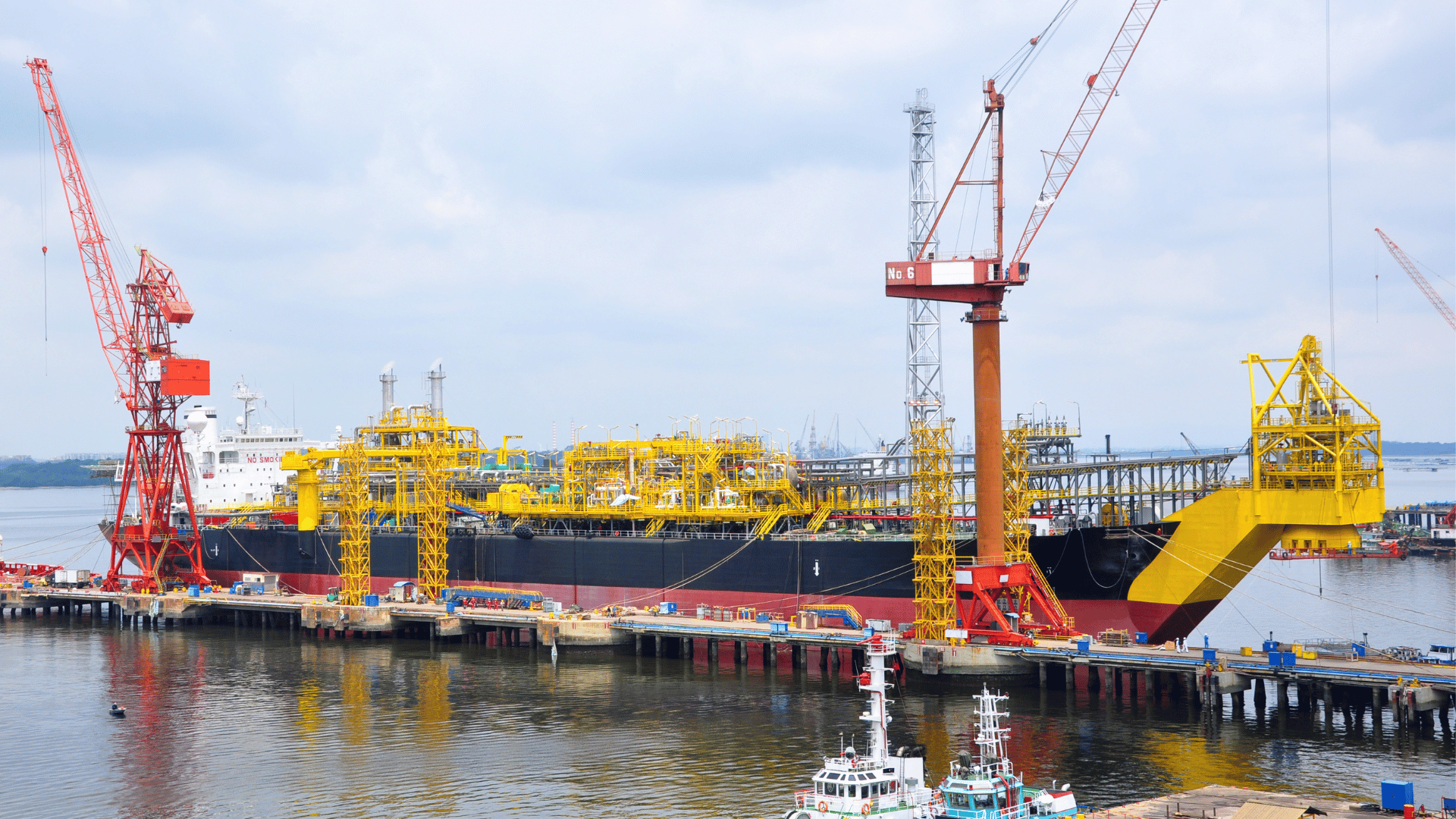
The offshore energy and marine services sectors are undergoing a profound transformation. While the oceans remain unchanged, the operational, environmental, regulatory, and commercial demands placed on Offshore Exploration and Production (“E&P”) activities have evolved significantly. Traditional oil and gas support operations are now expanding to include offshore wind, floating solar, carbon capture and storage (CCS), and emerging deep-water minerals.
At the centre of these activities is a diverse and highly specialised flotilla of Offshore Support Vessels (OSVs). Unlike conventional merchant shipping, OSV operations are complex, mission-critical, and time-sensitive, requiring uninterrupted 24/7 performance under challenging offshore conditions. Effective management of these vessels demands a rare combination of technical understanding, commercial acumen, risk awareness, and contractual discipline.
This intensive 3-day training programme is designed to equip participants with the practical knowledge and decision-making frameworks to effectively manage the commercial and technical operations of OSVs. Drawing on real-world case studies and practitioner experience, the course bridges the gap between charterparty obligations, operational execution, risk management, and financial performance, ensuring participants are prepared to meet the evolving demands of offshore operations.
By attending this intensive workshop, participants will be able to:
- Gain Working Knowledge of the Quality, Safety, Security, Health, and Environment Protection regulations essential for the operations of the OSVs
- Manage Operations of multiple OSVs by understanding the functional features of each vessel type, Charterparty commitments, functional flexibilities, and constraints at the offshore sites.
- Managing Towing Operations in accordance with the customer requirements, Tow types (Heavy-lift Barges, Rigs, Platforms, Semi-submersibles, Windmills, Solar Farms, etc.), lashing arrangement, loading and unloading arrangements, and precautions while on-Tow.
- Effectively manage risks due to OSV operations, by learning the contractual obligations, insurance regime, marine risks during decommissioning and wreck removal, and the importance of maintaining records as evidence in compliance with the contract clauses.
- Learn the contractual obligations of OSV Managers and Bareboat Charterers towards Ship Owners, Sub-Charterers, Vendors, Lessees, and Contractors, from a practitioner who has worked and consulted for major E&P contractors in Oil & Gas segments and Offshore & Marine construction yards.
- Effectively adopt best practices in the management of Vessels and Crew in geographically diverse locations and the stringent SOPs of NOC/IOC.
- Gain understanding of managing sanctions, blockades, and evolving geopolitical situations impacting International Trade Terms & Conditions for commercial business management processes.
This training course is designed for professionals directly involved in the commercial, technical, and operational management of Offshore Support Vessels (OSVs), including:
- Operations, Fleet, and Marine Managers responsible for managing OSVs engaged in offshore E&P, marine construction, towing, heavy-lift, and offshore renewable energy projects.
- Commercial, Chartering, and Contract Managers administering time charters, towage contracts, and offshore service agreements, including invoicing, claims, and performance management.
- Technical Superintendents, Project Managers, and Engineers overseeing vessel performance, special operations, repairs, breakdowns, and compliance with QHSE requirements.
- Senior and mid-level professionals from OSV Owners, Operators, Offshore E&P Contractors, and Marine Service Providers with prior exposure to offshore vessel operations or charterparty management.
- Professionals involved in managing offshore risks, insurance, claims, disputes, and contractual accountability across complex offshore operations.
- Intermediate
- Advanced
This course is delivered through a blend of expert-led instruction, real-world case studies, and facilitated group discussions drawn from live offshore operations. Practical, hands-on workshops and role-based simulations are used to reinforce learning, enabling participants to apply contractual, technical, and risk management principles to realistic operational scenarios. Continuous interaction, peer learning, and a final assessed exercise ensure practical competence and decision-making confidence.
Principal Management Consultant
Chartered Valuer and Appraiser (CVA)
FAIADR |Senior Accredited Director, M.S.I.D. | Member, ACFE |
LL.M. (IP Laws), M. Sc. (Maritime Studies),
M. Tech (Knowledge Engineering)
MBA, First Class CoC (MCA, UK), B. E. (Elect)
Your expert course leader, for more than four decades, has worked and consulted in the industry verticals encompassing: Technology, Oil & Gas Exploration & Production, Petrochemical Process Plants and Power Plant Construction Projects, Logistics & Warehousing, Marine, Offshore, Oil & Gas Pipelines, Infrastructure Development Projects (Ports, Offshore Supply Bases, Oil & Gas Terminals and Airports etc.), EPCIC Contracts, and Shipyards, in South East Asia, Africa, Middle East, Americas and Europe.
He has served as the Principal Management Consultant with management consultancy firms in Hong Kong, Malaysia, and Singapore, specializing in corporate management consultancy, international contract reviews, and alternative dispute resolution services. He undertakes special assignments to conduct audits and valuations of intangible properties, including proprietary processes for licensed production, and to license intellectual property rights (IP Rights) in patents, trademarks, and industrial designs. He is frequently engaged in assignments such as due diligence, acquisitions and mergers, resolving operational issues, technology transfer, agency services contract reviews, cost controls, and enhancing Supply Chain Management. He has been conferred the credentials of Chartered Valuer & Appraiser (CVA) by SAC and IVAS, in accordance with the international valuation standards-setting body, the IVSC.
His consulting experience includes Charterparty Management, Business Process Re-engineering, Diversifications, Corporate Development, Marketing, Complex Project Management, Feasibility Studies, Dispute Resolutions, and Market Research.
He has successfully assisted Marine and offshore E&P clients in managing contractual disputes arising from various international contracts for upgrading & conversion projects. He continues to be actively engaged in claims reviews, mediation, arbitration, litigation, and expert witness-related assignments, arising from international contracts and Charterparty Agreements.
He graduated with a bachelor’s degree in Electrical Engineering, an MBA in General Management, a Master of Technology in Knowledge Engineering, a Master of Science in Maritime Studies, and an LL.M. (IP Law). He also holds professional qualifications in Business Valuations and Appraisers for CVA, arbitration, law, and marine engineering, including the Chief Engineer’s First-Class Certificate of Competency (MCA, UK).
He is further qualified and accredited as a Certified International Arbitrator, Chartered Arbitrator, Sports arbitrator under CAS Rules, WIPO Neutral, Australian Communications and Media Authority (ACMA) Bargaining Code Arbitrator, Accredited Adjudicator, and Accredited Mediator (Malaysia). He is admitted to the international panels of arbitrators and neutrals.
Unlock the potential of your workforce with customized in-house training programs designed specifically for the energy sector. Our tailored, in-house courses not only enhance employee skills and engagement but also offer significant cost savings by eliminating travel expenses. Invest in your team’s success and achieve specific outcomes aligned with your organization’s goals through our expert training solutions. Request for further information regarding our on-site or in-house training opportunities.
In our ongoing commitment to sustainability and environmental responsibility, we will no longer providing hard copy training materials. Instead, all training content and resources will be delivered in digital format. Inspired by the oil and energy industry’s best practices, we are leveraging on digital technologies to reduce waste, lower our carbon emissions, ensuring our training content is always up-to-date and accessible. Click here to learn more.
To further optimise your learning experience from our courses, we also offer individualized “One to One” coaching support for 2 hours post training. We can help improve your competence in your chosen area of interest, based on your learning needs and available hours. This is a great opportunity to improve your capability and confidence in a particular area of expertise. It will be delivered over a secure video conference call by one of our senior trainers. They will work with you to create a tailor-made coaching program that will help you achieve your goals faster.
Request for further information post training support and fees applicable

Offshore E&P Support Vessels (OSVs) are specialized vessels that support offshore oil, gas, and renewable energy operations. They perform logistics, towing, anchor handling, subsea support, and emergency response. Unlike conventional merchant vessels, OSVs operate continuously near offshore installations and are designed for high-risk, time-critical offshore environments.
Integrated commercial and technical management ensures OSVs meet operational demands while complying with charterparty obligations. Technical performance affects vessel availability, safety, and maintenance, while commercial management governs hire payments, claims, and risk allocation. Because offshore operations are time-sensitive, poor coordination often leads to downtime, disputes, and financial losses.
Offshore E&P operations use several OSV types, including Platform Supply Vessels, Anchor Handling Tug Supply vessels, Construction Support Vessels, and Dive Support Vessels. Each vessel is designed for specific offshore tasks such as cargo transport, towing, heavy lifting, or subsea work. Selecting the correct vessel type is critical for safety and efficiency.
Charterparty agreements define how OSVs are operated, paid, and managed. They set performance standards, off-hire conditions, maintenance responsibilities, and payment terms. Unlike standard shipping contracts, OSV charterparties directly link daily operational performance to commercial outcomes. Non-compliance can result in hire deductions, disputes, or early contract termination.
OSV operations face technical risks such as equipment failure, towing incidents, and severe weather, as well as commercial risks like off-hire, sanctions, and disputed claims. Compared to onshore logistics, offshore risks are higher due to remote locations and continuous operations. Effective risk management relies on vessel suitability, maintenance planning, insurance, and accurate documentation.
Performance of Offshore E&P Support Vessels is measured using technical, operational, and financial indicators. These include vessel availability, downtime, fuel efficiency, safety performance, and compliance with service level agreements. Increasingly, environmental and regulatory factors such as emissions monitoring and ESG compliance are also used to evaluate overall vessel performance.
Digitalization is improving OSV operations through real-time vessel monitoring, automated reporting, and predictive maintenance. These tools increase transparency between owners and charterers while reducing downtime and operational risk. Compared to manual processes, digital systems support better performance tracking, fuel efficiency, and regulatory compliance in offshore energy operations.
The future of Offshore E&P Support Vessels is shaped by energy transition and diversification. While oil and gas remain important, OSVs increasingly support offshore wind, carbon capture and storage, and decommissioning projects. This shift requires more versatile vessels, stronger ESG compliance, and advanced operational management to remain competitive.
Related Courses