| Code | Date | Format | Currency | Team of 10 Per Person* |
Team of 7 Per Person* |
Early Bird Fee Per Person |
Normal Fee Per Person |
|---|---|---|---|---|---|---|---|
| PD981 | 25 - 27 Jan 2027 | Kuala Lumpur, Malaysia | SGD | 3,955 | 4,139 | 4,399 | 4,599 |
| PD981 | 25 - 27 Jan 2027 | Kuala Lumpur, Malaysia | USD | 3,095 | 3,239 | 3,399 | 3,599 |
| PD981 | 25 - 27 Jan 2027 | Singapore | SGD | 4,385 | 4,589 | 4,899 | 5,099 |
| PD981 | 25 - 27 Jan 2027 | Singapore | USD | 3,439 | 3,599 | 3,799 | 3,999 |
| PD981 | 25 - 27 Jan 2027 | Jakarta, Indonesia | USD | 3,095 | 3,239 | 3,399 | 3,599 |
| PD981 | 25 - 27 Jan 2027 | Abu Dhabi, United Arab Emirates | USD | 3,267 | 3,419 | 3,599 | 3,799 |
| PD981 | 25 - 27 Jan 2027 | Manila, Philippines | USD | 3,181 | 3,329 | 3,499 | 3,699 |
*Fee per person in a team of 7 or 10 participating from the same organisation, registering 6 weeks before the course dateRequest for a quote if you have different team sizes, content customisation, alternative dates or course timing requirements Request for in-person classroom training or online (VILT) training format
Learn in teams and save more! Enjoy group discounts of up to 50% off normal fees for team based learning. Contact us on [email protected] to learn more today!
Code
PD981Date
25 - 27 Jan 2027Format
Kuala Lumpur, MalaysiaCurrency
SGDTeam of 10
Per Person*
3,955
Team of 7
Per Person*
4,139
Early Bird Fee
Per Person
4,399
Normal Fee
Per Person
4,599
Code
PD981Date
25 - 27 Jan 2027Format
Kuala Lumpur, MalaysiaCurrency
USDTeam of 10
Per Person*
3,095
Team of 7
Per Person*
3,239
Early Bird Fee
Per Person
3,399
Normal Fee
Per Person
3,599
Code
PD981Date
25 - 27 Jan 2027Format
SingaporeCurrency
SGDTeam of 10
Per Person*
4,385
Team of 7
Per Person*
4,589
Early Bird Fee
Per Person
4,899
Normal Fee
Per Person
5,099
Code
PD981Date
25 - 27 Jan 2027Format
SingaporeCurrency
USDTeam of 10
Per Person*
3,439
Team of 7
Per Person*
3,599
Early Bird Fee
Per Person
3,799
Normal Fee
Per Person
3,999
Code
PD981Date
25 - 27 Jan 2027Format
Jakarta, IndonesiaCurrency
USDTeam of 10
Per Person*
3,095
Team of 7
Per Person*
3,239
Early Bird Fee
Per Person
3,399
Normal Fee
Per Person
3,599
Code
PD981Date
25 - 27 Jan 2027Format
Abu Dhabi, United Arab EmiratesCurrency
USDTeam of 10
Per Person*
3,267
Team of 7
Per Person*
3,419
Early Bird Fee
Per Person
3,599
Normal Fee
Per Person
3,799
Code
PD981Date
25 - 27 Jan 2027Format
Manila, PhilippinesCurrency
USDTeam of 10
Per Person*
3,181
Team of 7
Per Person*
3,329
Early Bird Fee
Per Person
3,499
Normal Fee
Per Person
3,699
*Fee per person in a team of 7 or 10 participating from the same organisation, registering 6 weeks before the course dateRequest for a quote if you have different team sizes, content customisation, alternative dates or course timing requirements Request for in-person classroom training or online (VILT) training format
About this Training Course
Bulk liquid tanker loading and unloading operations are operating under increasing regulatory, technical, and safety scrutiny. While the fundamentals of cargo transfer remain unchanged, expectations around HSEQ performance, custody transfer accuracy, interface management, and risk control have evolved significantly. International guidance such as ISGOTT 6 and updated Tanker Jetty Safety publications now set higher benchmarks for competence, accountability, and operational discipline across tank terminals, refineries, and offshore installations.
At the centre of these operations is the Loading Master—a critical role requiring far more than procedural knowledge alone. Loading Masters must coordinate complex ship–shore interfaces, manage dynamic operational risks, ensure regulatory compliance, and exercise sound judgement under time pressure. Effective performance demands a blend of technical expertise, situational awareness, safety leadership, and clear communication to protect people, assets, cargo integrity, and the environment.
This intensive, highly practical 3-day Loading Master Training Certification Course for Oil & Gas is designed to equip participants with the competencies required to safely and efficiently manage tanker operations to modern international standards. The programme incorporates the latest ISGOTT 6 guidance and introduces Cassandra, an AI-powered early warning system developed with TTT funding, capable of identifying knowledge gaps and predicting HSEQ and operational performance. Through applied learning and real-world operational insight, participants are prepared to meet today’s demanding operational and safety expectations.
This course in NOT intended for LNG or LPG Terminals.
At the end of this course, participants will learn to:
- Apply best practices and a structured framework to manage the ship–shore interface.
- Identify updated procedures for the safe handling, loading, and discharging of bulk liquids.
- Understand current international regulations and guidelines for tankers and terminals, including cargo properties and classifications.
- Improve operational efficiency for the storage, loading, and transportation of crude oil, petroleum products, and chemicals.
- Recognize Quality & Quantity risk factors and implement loss-prevention techniques.
- Enhance safety, environmental, and regulatory compliance.
- Understand pumps, piping, and tanker loading/discharge systems.
- Develop full competency in all loading and unloading operations.
This course is designed for personnel directly responsible for the loading, discharging, or custody transfer of oil or chemical cargoes, including:
- Oil & Gas loading masters and jetty operators, vessel planners, surveyors, marine superintendents
- Ship-brokers, charterers, inspectors, demurrage analysts, cargo planners
- Terminal logistics, scheduling, and cargo operations personnel
- Administrative and office staff seeking real-world operational understanding
- Management overseeing safe and effective marine terminal/custody transfer operations aligned with ISGOTT 6 and the latest Jetty Safety standards
- Intermediate
- Advanced
The course combines practical instruction, real-world scenarios, and simulations with continuous assessment supported by Cassandra AI to identify knowledge gaps and strengthen HSEQ and operational performance.
Unlock the potential of your workforce with customized in-house training programs designed specifically for the energy sector. Our tailored, in-house courses not only enhance employee skills and engagement but also offer significant cost savings by eliminating travel expenses. Invest in your team’s success and achieve specific outcomes aligned with your organization’s goals through our expert training solutions. Request for further information regarding our on-site or in-house training opportunities.
In our ongoing commitment to sustainability and environmental responsibility, we will no longer providing hard copy training materials. Instead, all training content and resources will be delivered in digital format. Inspired by the oil and energy industry’s best practices, we are leveraging on digital technologies to reduce waste, lower our carbon emissions, ensuring our training content is always up-to-date and accessible. Click here to learn more.


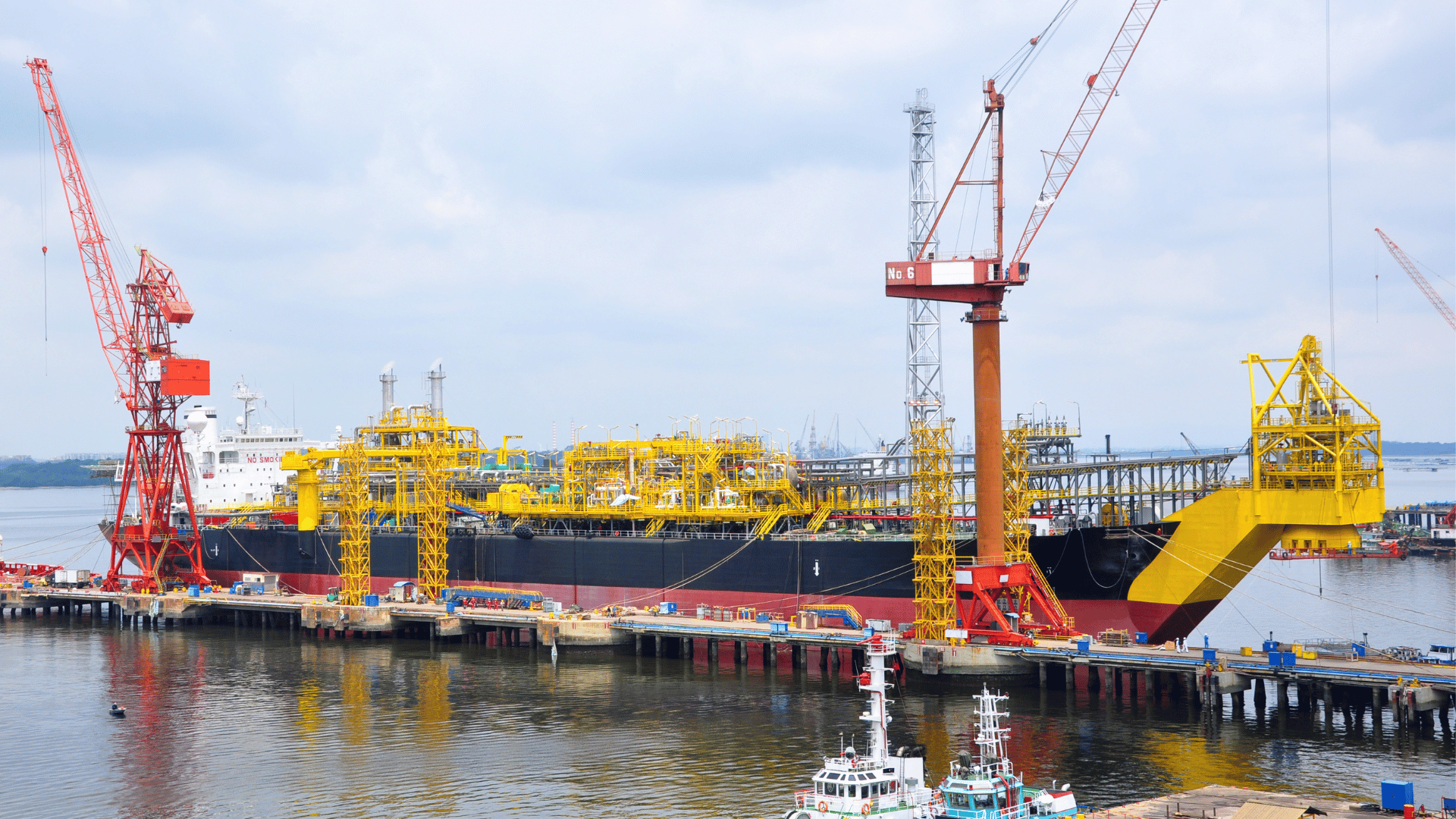
A Loading Master (sometimes called a Shore Loading Officer) is the person who coordinates and supervises bulk liquid cargo transfer between a tanker/barge and a shore facility (jetty, terminal, refinery, or offshore installation). The role centers on ship–shore interface management: confirming readiness, aligning procedures, controlling operational risk, and protecting custody transfer accuracy (quantity and quality). It typically covers crude oil, refined products, and chemical cargoes; LNG/LPG terminals use different systems and operating standards.
Ship–shore interface management is the structured way the vessel and terminal agree how a transfer will be executed safely and efficiently. It includes pre-arrival and pre-berthing information exchange, a pre-transfer conference, defining stop/abort criteria, and completing an industry checklist (commonly the ISGOTT ship–shore safety checklist). During operations, it means disciplined communication, monitoring key parameters (rates, pressures, tank levels), and coordinating changes (weather, equipment limits, cargo plan updates) without losing control of risk.
A dedicated Loading Master creates a single point of operational accountability at the jetty, which can reduce miscommunication, strengthen hazard control, and improve custody transfer discipline—especially when decisions must be made quickly. The role also helps align the vessel’s plan with terminal constraints (pumps, piping, tank availability) and supports consistent application of procedures. Limitations include the need for consistently high competence, clear authority boundaries with ship/terminal management, and avoiding over-reliance on one individual instead of robust SOPs and team cross-checking.
Many terminals base procedures on the International Safety Guide for Oil Tankers and Terminals (ISGOTT) and tanker-jetty safety guidance, which emphasize competence, checklists, emergency preparedness, and interface discipline. For measurement and custody transfer, recognized petroleum/chemical measurement practices (often referenced as ASTM/API methods) are widely used alongside local regulations and site-specific SOPs. Safety Data Sheets (SDS) inform chemical hazards, PPE needs, exposure risks, and emergency response requirements for specific products.
Custody transfer establishes the official delivered quantity (and often the quality basis) used for commercial settlement, so small errors can become major disputes. Loading Masters typically verify ship and shore calculations before and after transfer using documents such as the Bill of Lading, ullage/sounding reports, and vessel correction factors (e.g., VEF). They apply temperature, density, and trim/list corrections and reconcile shore tank gauges with ship figures to determine outturn, investigate discrepancies, and support quality & quantity (Q&Q) loss-prevention practices.
Major hazards include toxic exposures (e.g., H₂S and benzene), flammable petroleum vapors, loss of containment, and human-factor errors under time pressure. Additional risks include unsafe mooring, incorrect valve line-up, overfilling, and ignition sources near vapor release points. Controls usually combine SDS-driven procedures, appropriate PPE and gas monitoring, permits-to-work, and disciplined use of ship–shore checklists and emergency response plans. Where applicable, inert gas system requirements and tanker/terminal operating limits are also critical safeguards.
Common drivers include incomplete pre-arrival data, poor handovers, measurement mismatches, equipment constraints (pump capacity/line hydraulics), tank stratification, and stoppages triggered by safety deviations. Delays can also come from documentation and timekeeping issues that affect laytime and demurrage calculations (e.g., Statement of Facts and Notice of Readiness handling). Reduction measures include tighter ship–shore planning, clear loading/discharge plans with defined rate changes, standardized communication protocols, rigorous reconciliation practices, and consistent SOP use from berthing through completion.
Expectations continue to rise around HSEQ performance, risk control, and custody-transfer accuracy in bulk liquid terminals. Digital tools are expanding—from electronic checklists and real-time transfer monitoring to analytics that trend alarms, near-misses, and quality/quantity deviations. A notable trend is AI-assisted “early warning” and competency support that can flag knowledge gaps and predict operational risk before incidents occur. The future likely includes more standardized ship–shore data exchange, stronger human-factors controls, and increased focus on sustainability and spill prevention alongside operational efficiency.
Learn what past participants have said about EnergyEdge training courses
Excellent course, recommended for personnel working at jetty operation.
Shore Loading Officer, Brunei LNG
The Loading Master training course is specifically designed for any qualified personnel working at onshore or offshore terminals.
Pilot, Bintulu Port Sdn Bhd
Training was good with a lot of training materials shared.
Process/ Terminal trainer, Brunei LNG
Related Courses