
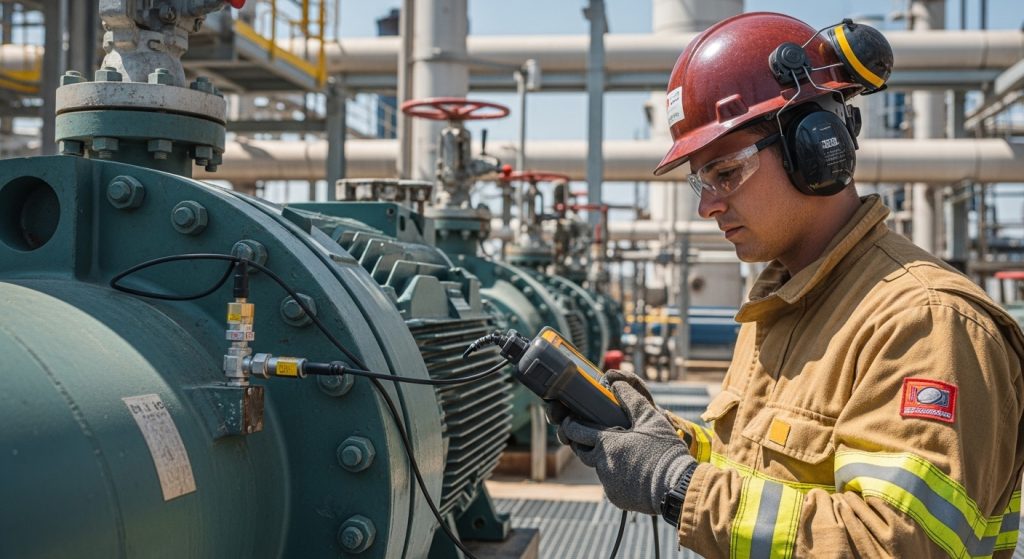
Reliability engineering in oil and gas has become a board-level topic again, but the industry’s operating model remains predominantly maintenance-led. Across upstream, LNG, midstream and downstream assets, many organisations still manage performance through work order volume, turnaround execution and short-cycle cost controls—rather than through a disciplined system of failure-mode governance. The result is familiar: periods of stability punctuated by forced interventions, deferment decisions made under time pressure, and recurring “bad actors” that survive multiple budget cycles.
This gap persists not because the sector lacks methods, digital tooling or awareness. It persists because reliability-centred engineering is an enterprise discipline that reallocates decision rights, changes the risk conversation and forces uncomfortable trade-offs between production flexibility, maintenance capacity, engineering bandwidth and supply chain constraints. Where those trade-offs are not confronted explicitly, “reliability” becomes a programme label rather than an operating model—despite the clear operational case for reliability engineering in oil and gas.

Reliability is an operating model shift — not a maintenance programme.
Industry Conditions Shaping Reliability Engineering in Oil and Gas

Volatility, compliance pressure and monitoring are raising the cost of variability.
Volatility Is Amplifying the Cost of Variability
In an environment shaped by price volatility, cost inflation in the services market and tighter labour availability, unplanned downtime is no longer just a local operations problem; it becomes a portfolio-level performance variable. Unplanned maintenance in a single facility can cascade into missed cargoes, reduced feed flexibility, unplanned flaring, or a downstream product imbalance. Even when overall production guidance is not affected, variability consumes management attention and undermines confidence in planning—precisely the volatility that reliability engineering in oil and gas is designed to reduce.
Compliance Expectations Increasingly Depend on Equipment Performance
Methane management, emissions constraints, integrity requirements and evidence-based reporting are tightening the link between maintenance quality and regulatory posture. Leakage, venting, flaring events and abnormal operating states often originate in component-level performance: valves, seals, compressors, pneumatic systems, instrumentation, and the integrity of supporting utilities. In practice, this means reliability is drifting from being “only” an availability and cost topic towards being a compliance and assurance topic as well. That shift elevates the importance of reliability engineering in oil and gas as a control discipline, not merely an optimisation initiative.
Digital Monitoring is Improving Faster than Decision-Making
Condition monitoring, analytics and “predictive maintenance” are more accessible than at any point in the past decade. Yet the industry’s limiting factor is rarely sensing capability; it is the governance required to turn signals into decisions—what to repair, when to defer, how to manage risk acceptance, and how to prioritise redesign and elimination. Where decision rules are not explicit, digital programmes either generate alert fatigue or become an expensive reporting layer with limited operational impact. In other words, instrumentation is scaling faster than decision quality, which remains a central constraint on reliability engineering in oil and gas.
Why Maintenance-Led Strategies Limit Reliability Engineering
Reactive Maintenance: Quick Fixes, Slow Learning
Reactive modes are often justified as operational agility. In reality, they create a structural bias towards restoring function quickly while underinvesting in eliminating recurrence. The pattern is recognisable:
- Risk is priced after the event, rather than evaluated before intervention.
- Failures repeat because causal mechanisms are not eliminated—particularly where rotating equipment trains are exposed to process instability, contamination, misalignment, lubrication issues, or protection system gaps.
- Work quality suffers under time pressure, increasing the probability of rework or latent defects.
- Safety exposure concentrates because interventions occur in degraded conditions, often with compressed planning windows.
Reactive maintenance is not inherently “wrong”; some failures are rational to run-to-fail. The problem is organisational: reactive behaviour expands beyond appropriate boundaries when governance is weak and when production priorities dominate failure mode control. In that environment, reliability engineering in oil and gas becomes rhetoric while the operating model remains event-driven.
Preventive Maintenance: Planned Work That Can Still Be Misaligned with Risk
Time-based preventive maintenance delivers auditable structure and resource planning. But it also imposes a ceiling on performance when it is not calibrated to failure modes and duty cycles:
- Over-maintenance creates defects through repeated intrusive work and repeated reassembly opportunities.
- Intervals drift away from reality as equipment duty, feed variability, and operating regimes change over time.
- Completion metrics become proxies for reliability, masking repeat failures and poor barrier health.
In mature assets, the most consequential failure mechanisms tend to be regime-dependent rather than time-dependent. A calendar-based plan can therefore look compliant while remaining blind to the conditions that drive functional failure—an issue at the core of reliability engineering in oil and gas.
Reliability Engineering in Oil And Gas: What Matters in Practice

Start with critical failure modes, govern decisions, then scale beyond maintenance.
Reliability-centred engineering is best understood as a risk allocation system. It forces explicit choices: what to prevent, what to predict, what to tolerate, and what to redesign. In practice, three elements determine whether it becomes operational reality.
Start with Dominant Failure Modes, Not an Enterprise “RCM Everything” Ambition
Many reliability efforts stall by attempting to industrialise the method before prioritising the problem. Effective reliability-centred engineering begins with a small set of production-critical and high-consequence functions—then scales only after decision workflows are proven. This prioritisation discipline is a defining feature of reliability engineering in oil and gas, where complexity and asset variety make blanket approaches expensive and slow.
For most operating environments, the initial proving ground is rotating equipment and its supporting systems: compressors, pumps, turbines, gearboxes, seal systems, lubrication and filtration, and protection logic. These systems are not just mechanically complex; they sit at the junction of process variability, operator actions, and maintenance precision.
Translate Insight into Governed Decisions
Condition monitoring only matters when it drives action. That requires explicit decision rules and clarity on authority:
- What thresholds trigger intervention, and which thresholds trigger controlled deferral?
- Who accepts the risk of deferral, and under what evidence standard?
- How are process upsets, operating envelope breaches and near-misses fed back into failure mode control?
Where decision rights are ambiguous, reliability teams generate analysis but cannot change outcomes. Conversely, when decision rights are clear, reliability engineering becomes an execution system rather than an advisory function—an essential transition for reliability engineering in oil and gas.
Extend Reliability Beyond Maintenance into Engineering and Supply Chain
The dominant reliability constraints are often outside maintenance’s direct control:
- Design quality and modification governance (materials selection, seal support plans, filtration, utilities integrity, instrument air quality, protection system design).
- Spares strategy and repair loops (lead times, repair capacity, obsolescence, interchangeability).
- Vendor and workshop quality assurance (acceptance criteria, test protocols, documentation, traceability).
Reliability-centred engineering therefore requires active collaboration across operations, maintenance, engineering, procurement and quality. Without this, reliability is reduced to “maintenance optimisation”, which is structurally insufficient for reliability engineering in oil and gas.
Barriers to Reliability Engineering Adoption
Reliability Competes with Short-Cycle Financial Logic
Preventing failures is often treated as discretionary engineering effort, while responding to failures is treated as essential operations work. This creates a predictable dynamic: prevention activity is reduced in cost-tight periods, which increases unplanned work later, which then consumes the very capacity needed to do prevention. It is a self-reinforcing loop.
Reliability-centred engineering breaks that loop only when leadership treats certain prevention activities as non-discretionary—because their absence increases enterprise risk and volatility. This is less a technical challenge than a governance choice that defines whether reliability engineering in oil and gas can persist beyond a single budget cycle.
The KPI Trap: Optimising Throughput, Not Reliability

Measure recurrence and risk reduction — not just activity metrics.
Many sites reward metrics that are operationally convenient rather than reliability-relevant:
- work order closure rates,
- preventive maintenance compliance,
- backlog reduction,
- turnaround duration and cost.
These are not unimportant. But they are weak proxies for reliability unless paired with indicators that measure recurrence and risk reduction, such as:
- repeat failure elimination rate on critical functions,
- risk-weighted backlog (not just hours),
- post-maintenance defect and rework rates,
- barrier and protection system health,
- stability of operating envelope (events per unit time).
If the scorecard rewards throughput, organisations will optimise throughput—often at the expense of learning.
Role Clarity and Authority are Often Missing
Some organisations appoint a reliability lead but leave accountability diffuse. A certified reliability engineer may exist in title, yet remain structurally constrained if:
- maintenance planning is not aligned to reliability priorities,
- operations can override interventions without a shared risk language,
- engineering change is slow or underfunded,
- spares policies are driven mainly by procurement cost targets.
Reliability becomes effective only when it is embedded into how work is selected, how deferrals are governed, and how modifications are prioritised.
Training is Necessary, but the Operating Model Determines Outcomes
Competence gaps are real—especially in rotating equipment failure modes, precision installation practices, lubrication management and condition monitoring interpretation. A focused rotating equipment course can raise diagnostic literacy, and rotating equipment certification courses can help standardise minimum technical understanding across teams.
However, training does not substitute for standards, procedures and decision workflows. If governance remains unchanged, training improves conversation quality more than it improves reliability outcomes. In practice, rotating equipment certification courses have the most impact when coupled with job-role clarity, decision authority, and measurable work quality controls.
Trade-Offs and Risks in Reliability Engineering
Deferral Discipline Versus Production Flexibility
Production-led cultures often treat maintenance deferral as a routine lever.Reliability-centred engineering does not prohibit deferral; it formalises it. The trade-off is uncomfortable: tighter deferral governance may reduce short-term flexibility, but it reduces the probability of high-impact unplanned events and the cumulative risk embedded in degraded operation.
Intrusive Work Versus Disturbance Risk
A reliability approach will often reduce intrusive time-based maintenance on some items while increasing targeted interventions on others. This shifts risk from “wear-out by time” assumptions to “evidence-based intervention” decisions. The organisation must be able to tolerate the ambiguity that comes with condition-based decisions—especially where data quality is uneven.
Digital Optimism Versus Operational Realism
Predictive tools can identify anomalies, but anomalies are not decision-ready. Converting anomalies into action requires work packs, spares, access planning, and operations coordination. Overpromising the operational impact of digital solutions can create cynicism; under-embedding them in governance creates waste.
What Changes When Reliability-Centred Engineering is Real
Availability Becomes More Predictable, Not Just Higher
The primary benefit is reduced volatility: fewer forced outages, fewer emergent scope additions during turnarounds, and fewer “surprise” interventions. Predictability improves planning efficiency across contracting, logistics, and inventory. In constrained labour markets, predictability can matter as much as absolute uptime.
Performance Improves Through Stability and Reduced Losses
Stabilising critical rotating equipment reduces recycle, off-spec production, and emergency flaring. Better seal and valve performance reduces fugitive emissions and the operational burden associated with abnormal operating states. These are second-order benefits, but they are increasingly material in modern operating environments.
Risk Becomes Managed Through Learning, Not Heroics
Reliability-centred engineering shifts the organisation from “respond fast” to “remove recurrence”. That requires sustained root cause elimination and disciplined change management. Over time, it reduces the operational dependence on heroics, which is a leading indicator of a healthier risk posture.
Future Considerations for Reliability Engineering in Oil and Gas
The sector is likely to see a widening performance gap rather than a uniform shift.
- Organisations that treat reliability as cross-functional risk governance—integrating operations, maintenance, engineering and supply chain—will continue to improve predictability and reduce volatility.
- Organisations that treat reliability as a maintenance optimisation initiative will continue to oscillate between preventive compliance and reactive firefighting.
- Digital adoption will not, by itself, resolve this. The differentiator will be whether decision rights, deferral governance, work selection and modification prioritisation are redesigned to support reliability outcomes.
Rotating equipment will remain the most visible test of maturity, because it exposes weaknesses in operating discipline, maintenance precision, repair governance and technical competence. Where those interfaces are managed well, reliability-centred engineering becomes tangible. Where they are not, the shift remains elusive—regardless of how much monitoring or analytics is deployed.
Frequently Asked Questions
Reliability engineering in oil and gas helps teams prevent failures by focusing on the causes of breakdowns and the risk they create. Maintenance teams carry out the work to keep equipment running. Reliability engineering sets priorities, sets rules for deferral, and drives fixes that stop repeat problems.
Reactive work gets units back online fast, but teams often repeat the same faults because they don’t remove the cause. Time-based PM can miss real wear and operating changes, and it can also create defects through unnecessary strip-downs. Both approaches can push activity targets over stable performance.
Teams start with the most critical equipment and the few failure modes that cause the most downtime or risk. They then choose the right response: condition-based tasks, functional tests, redesign, or run-to-fail when the impact stays low. They also track repeat failures and close them out for good.
It cuts unplanned stoppages by reducing surprises and repeat faults. Teams use clear trigger levels and simple risk rules to decide when to fix, defer, or redesign. Over time, sites plan work earlier and rely less on emergency call-outs.
Many sites reward cost and output metrics more than risk reduction, so prevention work loses funding. Teams also struggle when no one owns deferral decisions or engineering change. Long spares lead times and skills gaps can keep plants stuck in firefighting.
