
Natural Gas Outlook 2026: Market Trends, Risks and Opportunities
The natural gas outlook for 2026 is more complex than it appeared during the immediate post-2022 energy crisis. New LNG supply is expected to ease some market tightness, but geopolitical risk, weather volatility, contract exposure, import dependence and decarbonisation pressure continue to shape the natural gas outlook. The future of natural gas is not a single global story. Europe, Asia, North America and Southeast Asia are moving under different policy, infrastructure and affordability constraints. Understanding these regional differences matters for producers, traders, buyers and investors operating across global gas markets.
What Does the Natural Gas Outlook for 2026 Suggest?
The natural gas outlook in 2026 is likely to be shaped by LNG supply growth, uneven demand recovery, pricing volatility, energy security concerns and increasing emissions scrutiny. Gas will remain important for power generation, industrial use and energy system reliability, but investment decisions will face greater pressure from climate policy, methane regulation, infrastructure constraints and competition from renewables and storage.
Natural gas remains strategically useful, but increasingly contested. Gas-fired power generation continues to provide flexible capacity in markets with rising renewable penetration. Industrial users in petrochemicals, fertilisers and manufacturing still depend on gas for process heat and feedstock. LNG plays a growing role in balancing regional supply and demand, particularly in import-dependent markets.
However, long-term gas investments now face policy, pricing and demand uncertainty that was less prominent five years ago. The IEA’s Gas Market Report Q1 2026 states that LNG supply growth is reducing market tightness, but geopolitical tensions and weather impacts may still cause price volatility. This makes a balanced view essential: gas markets may loosen, but they are not becoming risk-free. The need to distinguish short-term energy security from long-term asset resilience has become more pressing for companies evaluating new projects or contract commitments.
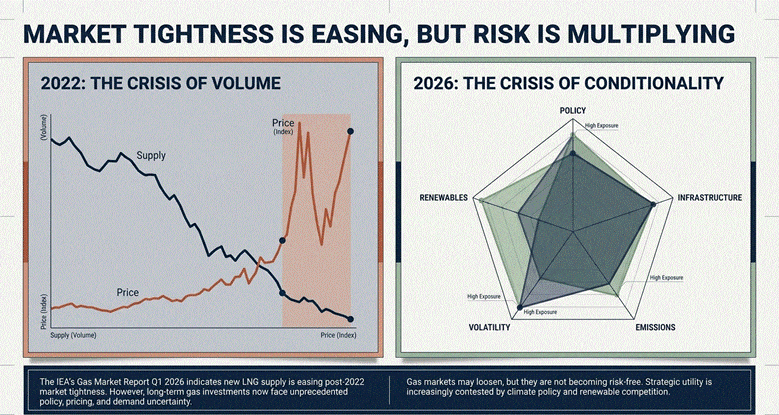
LNG supply may ease market tightness, but volatility, geopolitics and emissions pressure continue to shape the 2026 gas outlook.
How Is LNG Growth Changing the Natural Gas Outlook?
LNG growth is one of the most important forces shaping the natural gas outlook in 2026. New liquefaction capacity can improve market flexibility and ease supply pressure, but LNG also exposes buyers and sellers to global competition, shipping constraints, price spreads and geopolitical disruption.
New LNG supply additions are coming from major producing regions, with US LNG exports playing a particularly important role. The EIA forecasts US marketed natural gas production to increase by 2% in 2026 and 3% in 2027, with the pace of LNG export ramp-up identified as a key factor affecting the outlook. More LNG supply does not eliminate regional price spikes. Weather-driven demand, shipping disruptions and contract structures can still create tightness in specific markets.
KEY INSIGHT
LNG supply growth does not eliminate regional price spikes. Weather-driven demand, shipping disruptions, and contract structures can still create tightness in specific markets — even when overall supply appears adequate. Companies relying on spot LNG exposure face full price volatility with no buffer.
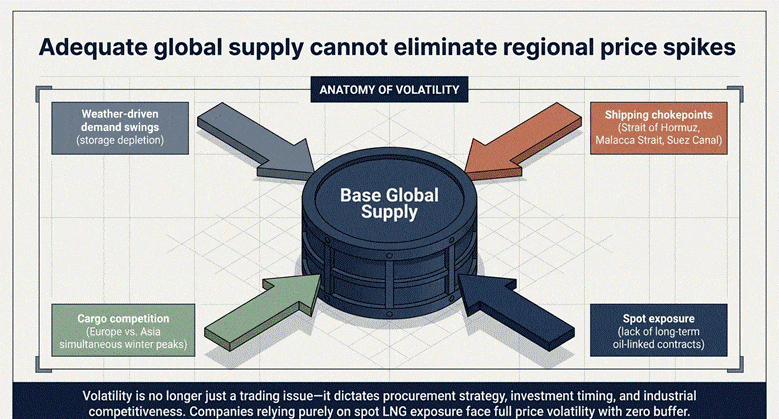
Even with adequate global supply, weather shocks, shipping constraints and spot LNG exposure can still trigger regional price spikes.
LNG connects regional gas markets in ways that pipeline-only systems cannot. This creates opportunities for portfolio optimisation, cargo diversification and price arbitrage. It also increases exposure to global competition. European and Asian buyers may compete for the same cargoes during winter demand peaks, pushing spot prices higher even when overall supply appears adequate.
Flexible contracts and portfolio management have become more important as LNG markets mature. Long-term oil-linked contracts still dominate in some regions, but hub-linked pricing and destination-flexible agreements are growing. Companies that can manage LNG exposure across multiple pricing mechanisms, shipping routes and delivery points are better positioned to handle market volatility. Understanding LNG commercial and operational structures, LNG pricing dynamics and contract flexibility options has become a core capability for gas market participants.
| Build your LNG capability Understanding LNG contract structures, pricing mechanisms, and portfolio risk is one of the most valuable skills for gas market professionals in 2026. EnergyEdge’s LNG Commercial Operations and Natural Gas Pricing and Trading courses are built for exactly this — covering cargo optimisation, hub-linked pricing, and risk allocation across the LNG value chain. → Explore LNG courses at EnergyEdge |
Where Does the Natural Gas Outlook Point to Demand Growth or Weakness?
Natural gas demand in 2026 will be uneven. Growth is likely to be strongest in markets where gas supports power reliability, industrial activity, LNG import diversification or coal-to-gas switching. Demand may be weaker in markets where renewables, electrification, efficiency gains and policy pressure reduce gas consumption.
Power generation demand remains important in systems requiring flexible capacity to balance variable renewable output. Gas-fired power plants can ramp up and down more quickly than coal or nuclear, making them valuable for grid stability. Industrial demand from petrochemicals, fertilisers, refining and manufacturing continues in regions with competitive gas pricing and established infrastructure.
LNG demand in import-dependent Asian economies is likely to remain strong, driven by energy security concerns and limited domestic supply. Southeast Asia faces rising import dependence as mature fields decline and domestic production struggles to keep pace with demand growth. European demand remains uncertain due to efficiency measures, renewable capacity additions and policy pressure to reduce fossil fuel consumption.
Data centre growth and electrification are creating new power demand in some markets, which could support gas-fired generation where renewable capacity cannot meet baseload or reliability requirements. However, this is not uniform. The difference between structural demand growth and short-term weather-driven demand matters for investment planning. A cold winter can create temporary demand spikes, but that does not guarantee sustained demand growth over a 20-year project lifespan.
Regional Demand Dynamics
Asia-Pacific remains the largest LNG import region, but demand growth rates vary by country. Japan, South Korea and Taiwan continue to rely on LNG for power generation and industrial use. China’s gas demand growth has moderated but remains significant. India represents potential long-term demand growth, but affordability and infrastructure constraints limit near-term expansion.
Europe has reduced Russian pipeline gas dependence since 2022, replacing much of it with LNG imports. This has created new LNG demand, but European gas consumption has also declined due to high prices, efficiency measures and renewable capacity additions. Whether European LNG demand remains at elevated levels depends on price trends, storage availability and winter weather.
North America has abundant domestic gas supply, with demand driven primarily by power generation, industrial use and LNG exports. US gas-fired power generation faces competition from renewables and coal price fluctuations, but gas remains the largest single source of electricity generation. LNG export capacity is the main driver of incremental gas demand growth in the United States.
Natural gas demand at a glance — key regions
| Asia-Pacific (Japan, South Korea, Taiwan) ▲ Strong demand DRIVER LNG as primary power generation fuel; limited domestic alternatives. RISK Spot price spikes when Asia and Europe compete for the same LNG cargoes. | Southeast Asia (Malaysia, Thailand, Vietnam) ▲ Strong demand DRIVER Industrial growth, declining domestic fields, rising LNG import capacity. RISK Affordability constraints and growing import dependence on global markets. |
| North America → Moderate demand DRIVER LNG exports and gas-fired power remain the primary demand engines. RISK Increasing competition from renewables and coal price fluctuations. | Europe ▼ Cautious outlook DRIVER LNG diversification replacing Russian pipeline gas; winter storage needs. RISK Efficiency gains, renewable expansion, and policy pressure reducing consumption. |
Sources: IEA Gas Market Report Q1 2026 · EIA Short-Term Energy Outlook 2026 · PETRONAS Activity Outlook 2026–2028
Why Does Pricing Volatility Remain a Major Gas Market Risk?
Pricing volatility remains a core feature of the natural gas outlook because gas markets are exposed to weather, storage levels, LNG cargo competition, shipping disruptions, geopolitical tensions, currency movements and contract structures. Even when supply improves, regional price spikes can still occur.
Weather-driven demand swings are one of the largest sources of volatility. A colder-than-expected winter in Europe or Asia can tighten LNG markets quickly, pushing spot prices higher. Conversely, mild weather can leave storage levels high and prices weak. Storage plays a critical role in managing seasonal demand, but storage capacity varies significantly by region. Europe has substantial storage, while some Asian markets have limited buffer capacity.
Competition between Europe and Asia for LNG cargoes can amplify price volatility during periods of high demand. When both regions need additional supply simultaneously, spot LNG prices can spike. Shipping constraints, including Strait and canal chokepoints, add further risk. Disruptions to key shipping routes can delay cargoes and create temporary supply shortages in specific markets.
Contract structures affect exposure to volatility. Buyers with long-term contracts linked to oil prices have some price stability, but may face higher costs when oil prices rise. Buyers relying on spot LNG markets have flexibility, but are fully exposed to price swings. Hub-linked pricing, common in the United States and increasingly used in Europe, ties gas prices to regional supply and demand balances, which can be volatile.
Volatility is not just a trading issue. It affects procurement strategy, investment timing, project economics, industrial competitiveness and energy affordability. Utilities and industrial buyers must manage price risk through hedging, contract diversification and supply portfolio optimisation. Understanding natural gas pricing mechanisms, trading strategies and risk management tools is important for companies operating in volatile markets.
What Are the Main Risks Facing the Future of the Natural Gas Industry?
The future of the natural gas industry is exposed to investment risk, policy risk, emissions risk, geopolitical risk, infrastructure risk and demand uncertainty. These risks do not mean gas demand will disappear, but they do make long-term investment decisions more complex.
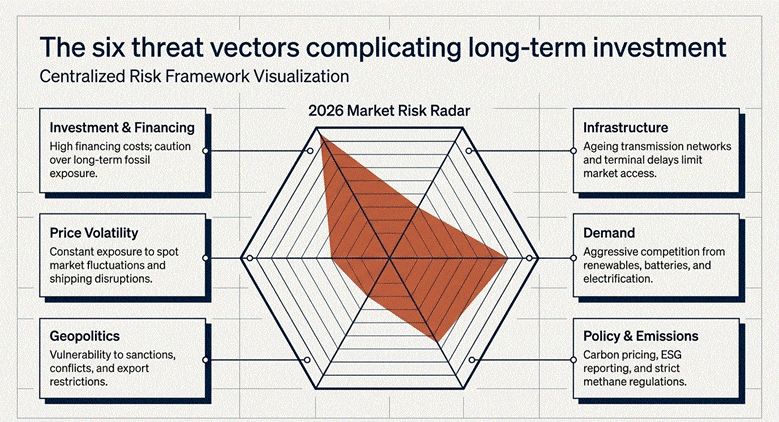
Gas investment decisions now depend on managing connected risks across pricing, policy, infrastructure, geopolitics, demand and emissions.
Investment risk
Long-cycle gas projects require confidence in future demand, pricing, financing and offtake. Uncertainty over climate policy and buyer appetite can complicate final investment decisions. Gas projects approved today may operate for 20 to 30 years, but demand visibility over that timeframe is lower than it was a decade ago. Financing costs have risen, and some investors are more cautious about long-term fossil fuel exposure due to climate commitments or regulatory pressure.
Projects that can demonstrate credible offtake agreements, competitive cost structures and lower emissions performance are better positioned to secure investment. Projects without clear demand signals or in regions with high policy uncertainty face greater difficulty attracting capital.
RISK TO WATCH
A gas-fired power plant or LNG terminal built today may operate for 25–30 years. If demand declines faster than anticipated due to renewable deployment or policy shifts, these assets risk becoming stranded before the end of their operating life. The bridge fuel narrative assumes the bridge has a known end — in 2026, that endpoint is increasingly uncertain.
Regulatory and climate risk
Methane emissions, carbon pricing, ESG scrutiny and stricter reporting requirements can affect operating costs, project approvals and financing. Methane leakage from production, processing, transmission and distribution reduces the climate performance of natural gas. Regulations targeting methane emissions are becoming more common, requiring operators to invest in monitoring, leak detection and mitigation.
Carbon pricing mechanisms, including carbon taxes and emissions trading systems, add costs to gas consumption in some markets. ESG commitments from buyers, investors and financial institutions can influence contracting and financing decisions. Gas projects that cannot demonstrate emissions management and credible climate alignment may face reduced market access.
Geopolitical risk
Gas markets remain vulnerable to sanctions, conflict, shipping disruptions and changes in export or import policy. The 2022 disruption of Russian gas supplies to Europe demonstrated how quickly geopolitical events can reshape gas trade flows. LNG shipping routes pass through geopolitical chokepoints, including the Strait of Hormuz, the Malacca Strait and the Suez Canal. Disruptions to any of these routes can affect cargo delivery times and costs.
Export restrictions, import tariffs and changing trade relationships can also affect gas markets. Countries may prioritise domestic supply security over export commitments during supply shortages. Buyers dependent on a single supplier or route face greater geopolitical risk than those with diversified supply portfolios.
Infrastructure risk
Gas demand depends on pipelines, LNG terminals, regasification capacity, storage, gas-fired power plants and downstream industrial demand. Infrastructure constraints can limit market access even when supply is available. Delays in pipeline construction, terminal approvals or power plant development can reduce demand growth.
Ageing infrastructure also presents risk. Gas transmission pipelines, processing facilities and distribution networks require maintenance, integrity management and periodic upgrades. Asset integrity and life extension strategies are important for maintaining reliable gas supply. In some regions, underinvestment in infrastructure has created bottlenecks that limit gas flow to demand centres.
Demand risk
Gas faces competition from renewables, batteries, efficiency, electrification and alternative fuels, particularly in markets with strong policy support. Renewable energy costs have declined significantly over the past decade, making wind and solar competitive with gas-fired power generation in many markets. Battery storage is increasingly used to manage short-term power system flexibility, reducing the need for gas peaking plants.
Electrification of heating and industrial processes can reduce gas demand in some sectors. Policy support for heat pumps, electric boilers and industrial electrification is growing in Europe and parts of Asia. Efficiency improvements also reduce gas consumption. Buildings, industry and power generation are all becoming more efficient, which can lower gas demand growth even when economic activity increases.
| Navigate gas market complexity with expert training Managing methane risk, evaluating CCS projects, or structuring a resilient gas contract requires cross-disciplinary expertise that is hard to build on the job. EnergyEdge delivers focused, practical training for professionals working across upstream gas, LNG, pipelines, emissions management, and project economics — designed for the realities of 2026 gas markets. → View all gas and LNG courses at EnergyEdge |
What Opportunities Could Define Natural Gas Markets in 2026?
The strongest natural gas opportunities in 2026 are likely to sit in LNG portfolio optimisation, gas-to-power, industrial demand growth, flexible contracting, methane reduction, carbon capture integration, gas infrastructure reliability and regional energy security.
LNG trading and portfolio optimisation offer opportunities for companies that can manage complex supply and demand balances. LNG market participants with diverse supply sources, flexible shipping and destination optionality can capture value from regional price differences. Flexible contract structures that allow cargo redirection and volume adjustments provide commercial advantage in volatile markets.
Gas-to-power remains an important opportunity in emerging and reliability-constrained markets. Countries seeking to improve power system reliability, reduce reliance on oil-fired generation or replace ageing coal plants may turn to gas-fired power generation. Combined cycle gas turbine plants offer high efficiency and flexibility, making them suitable for systems with growing renewable capacity.
Industrial gas demand in Asia and Southeast Asia presents growth potential. Petrochemical production, fertiliser manufacturing and industrial heat applications continue to rely on gas. Regions with competitive gas pricing and established infrastructure can attract industrial investment. However, affordability and supply security remain important considerations.
Methane monitoring and emissions reduction are becoming commercial differentiators. Gas suppliers that can demonstrate lower methane intensity may access premium markets or preferential contracts. Technology for leak detection, continuous monitoring and emissions reporting is improving, making methane management more achievable. Companies that invest in methane reduction may improve their competitive position as emissions scrutiny increases.
Carbon capture and storage integration offers potential for gas processing and gas-fired power generation. CCS can reduce the carbon intensity of gas production and consumption, extending the role of gas in decarbonising energy systems. However, CCS deployment depends on cost competitiveness, policy support, storage availability and infrastructure readiness.
Blue hydrogen production, where commercially and policy-supported, represents another potential gas opportunity. Blue hydrogen is produced from natural gas with carbon capture, offering a lower-carbon hydrogen pathway. However, blue hydrogen faces competition from green hydrogen produced using renewable electricity, and its commercial viability depends on gas prices, carbon prices and policy incentives.
Gas infrastructure resilience and reliability offer opportunities in markets where supply security is a priority. Investment in pipeline integrity, gas storage, LNG terminal capacity and gas distribution networks can strengthen energy security. Digital tools for trading, maintenance, forecasting and asset optimisation are improving operational efficiency and reducing risk.
How Does Natural Gas Fit into the Energy Transition?
Natural gas can support the energy transition where it improves reliability, replaces higher-emission fuels, supports industrial demand or enables flexible power generation. However, its transition role depends on methane control, carbon intensity, infrastructure economics and whether it complements rather than delays lower-carbon investment.
Gas-fired power generation can provide flexible capacity in power systems with variable renewables. Wind and solar output fluctuates with weather conditions, creating periods when additional capacity is needed to maintain grid stability. Gas plants can ramp up quickly to fill these gaps, supporting renewable integration. However, this assumes that gas-fired generation is economically competitive and that methane emissions are managed. Uncontrolled methane leakage can reduce or eliminate the climate benefit of using gas instead of coal.
Gas can replace higher-emission fuels in specific contexts. Switching from coal to gas in power generation or from oil to gas in industrial heating can reduce carbon emissions, provided methane leakage is controlled. In some regions, gas has played this role during the past decade. However, the climate benefit diminishes if gas displaces renewable energy or delays investment in zero-emission alternatives.
The limits of calling gas a bridge fuel are becoming clearer. The bridge fuel narrative assumes that gas provides a temporary transition pathway while renewable capacity scales up. In practice, gas infrastructure has long operating lifespans. A gas-fired power plant or LNG terminal built today may operate for 25 to 30 years. If demand for gas declines faster than anticipated due to renewable deployment, policy changes or cost shifts, these assets could become stranded.
Methane leakage and lifecycle emissions are critical to gas’s transition role. Methane is a potent greenhouse gas, and leakage from production, processing, transmission and distribution significantly increases the climate impact of natural gas. Reducing methane emissions requires investment in monitoring, leak detection and infrastructure upgrades. Gas projects and supply chains that cannot demonstrate low methane intensity face greater climate and reputational risk.
Carbon capture and low-carbon gas pathways offer potential routes for gas to remain part of decarbonising energy systems. CCS can reduce emissions from gas processing and gas-fired power generation. Blue hydrogen production with carbon capture offers a lower-carbon use for natural gas. Gas infrastructure may also play a role in hydrogen or CO₂ transport where commercially viable, allowing existing pipelines to support new energy systems.
Natural gas can support transition objectives in specific systems, but only where it improves reliability, reduces higher-emission fuel use and is managed with credible emissions controls. The transition role of gas is conditional, not guaranteed.
Why Does the Malaysia and Southeast Asia Gas Outlook Matter?
Malaysia and Southeast Asia matter to the natural gas outlook because the region is balancing energy security, domestic production constraints, LNG import dependence, industrial growth, power demand and decarbonisation policy. Gas remains important, but the region must manage affordability, infrastructure and emissions challenges.
Malaysia is a significant gas producer and LNG player. The country has supplied LNG to global markets for decades and remains an important exporter. Domestic gas demand supports power generation and industrial activity, including petrochemicals and manufacturing. However, mature fields, declining production rates and rising domestic consumption are creating tighter supply balances. Investment in upstream development, gas processing and infrastructure is needed to maintain production and meet domestic demand.
Gas demand in Southeast Asia is driven by power generation and industry. Many countries in the region rely on gas-fired power plants for baseload and flexible capacity. Industrial users, including petrochemicals, fertilisers and manufacturing, depend on gas for feedstock and process heat. Economic growth and rising electricity demand support continued gas consumption, but affordability and supply security are ongoing concerns.
LNG imports are growing across Southeast Asia as domestic production struggles to keep pace with demand. Thailand, Singapore and the Philippines have added LNG import capacity in recent years. Other countries are planning or considering LNG terminals to diversify supply and improve energy security. Rising import dependence increases exposure to global LNG price volatility and shipping risks.
Maturing fields and upstream investment needs present challenges for the region. Many Southeast Asian gas fields have been producing for decades, and production is declining. New field developments, enhanced recovery projects and offshore exploration are needed to offset declines and meet future demand. Investment in upstream gas projects faces competition from other energy sectors and must navigate policy, regulatory and financing considerations.
Methane reduction, carbon capture and low-carbon gas pathways are becoming more relevant in Southeast Asia. Regional governments are setting emissions reduction targets and considering carbon pricing mechanisms. Gas producers and users must address methane emissions and explore carbon capture opportunities to align with national climate commitments.
PETRONAS’ Activity Outlook 2026–2028 provides forward visibility for Malaysia’s oil and gas services industry across upstream, downstream, gas and maritime activities, reflecting the continued importance of domestic industry readiness during Malaysia’s energy transition. The outlook highlights opportunities and investment areas that support Malaysia’s gas sector development.
What Are the Strategic Implications for Companies Operating in Gas Markets?
Companies operating in gas markets need to evaluate whether their assets, contracts and commercial strategies are resilient across multiple price, policy and demand scenarios. In 2026, gas strategy requires closer integration of market analysis, infrastructure planning, emissions management and energy transition risk.
Scenario planning for demand and price volatility is important. Companies should assess how their operations, contracts and investments perform under different future conditions, including high and low gas prices, faster or slower renewable deployment, stricter or more lenient emissions regulation and varying levels of geopolitical stability. Strategies that depend on a single price or demand trajectory carry greater risk.
Contract flexibility and long-term offtake matter for both buyers and sellers. Buyers benefit from contracts that allow volume adjustments, destination flexibility and diversified pricing mechanisms. Sellers benefit from long-term agreements that provide revenue certainty, but must balance this with market exposure and portfolio optionality.
LNG portfolio management is becoming more complex. Companies with multiple supply sources, shipping options and delivery points must optimise their portfolios to manage costs, capture price arbitrage opportunities and meet customer requirements. This requires commercial capabilities, market intelligence and operational coordination.
Methane and carbon intensity reduction are increasingly important for competitive positioning. Gas suppliers that can demonstrate lower emissions may access premium markets, secure financing on better terms and meet buyer ESG requirements. Investment in methane monitoring, leak detection and emissions reporting can provide commercial advantage.
Infrastructure reliability and asset life extension remain priorities. Gas transmission pipelines, processing facilities, storage and distribution networks require ongoing maintenance and integrity management. Companies that can extend asset life while maintaining safety and reliability standards reduce capital costs and improve returns.
Integration with renewables, hydrogen, carbon capture and power markets is becoming more relevant. Gas companies are exploring how their assets, infrastructure and capabilities can support broader energy transition objectives. This includes co-locating gas and renewable generation, using gas infrastructure for hydrogen or CO₂ transport, integrating carbon capture at gas facilities and participating in power markets that value flexibility.
What Capabilities Will Gas Market Professionals Need in 2026 and Beyond?
Gas market professionals will need broader cross-disciplinary capability in 2026, including LNG commercial strategy, natural gas pricing, trading, pipeline infrastructure, gas processing, emissions management, carbon capture, hydrogen, power generation, project economics and risk management.
Technical expertise alone is no longer sufficient. Professionals working across LNG, upstream gas, gas processing, power generation, trading, project finance and energy strategy increasingly need to understand how markets, policy, emissions and infrastructure interact. Commercial professionals benefit from understanding technical constraints and operational realities. Technical professionals benefit from understanding market dynamics, contract structures and financial drivers.
FOR PROFESSIONALS
Professionals who can assess molecules, infrastructure, markets, emissions, and commercial risk together are better positioned to make sound decisions in today’s gas market. Siloed technical or commercial knowledge is no longer sufficient — the capability gap is now cross-disciplinary, and closing it is a genuine competitive advantage.
As gas markets become more interconnected and exposed to policy, pricing and transition risk, the need for integrated capability grows. EnergyEdge supports this capability development through professional courses across areas such as gas and LNG, natural gas pricing and trading, LNG contracts, gas transmission pipelines, upstream gas conditioning, combined cycle gas turbine power plants, carbon capture and storage, hydrogen infrastructure, project economics, asset integrity and energy risk management. This breadth reflects the direction of the industry: the future of natural gas will require professionals who can assess molecules, infrastructure, markets, emissions and commercial risk together.
Commercial professionals need to understand LNG market dynamics, pricing mechanisms, contract structures and trading strategies. They must be able to evaluate supply and demand balances, assess price risk and optimise portfolios. Technical professionals need to understand gas processing, pipeline engineering, asset integrity and infrastructure reliability.
Emissions management and carbon capture capabilities are increasingly important across all roles. Professionals must understand methane monitoring, emissions reporting, carbon pricing and CCS project development.
Risk management and financial analysis capabilities are needed across commercial, technical and operational roles. Professionals must be able to assess project economics, evaluate investment decisions and manage financial risk.
Power sector and energy transition knowledge is becoming more relevant for gas professionals. Understanding how gas interacts with renewables, storage and electrification helps professionals assess future demand, identify opportunities and manage transition risk.
Conclusion: A More Conditional Future for Natural Gas
Natural gas is not disappearing from the energy system in 2026. In many markets, it remains important for power reliability, industrial activity, LNG trade and energy security. However, its future is becoming more conditional.
The strongest opportunities will sit with companies and markets that can manage price volatility, secure infrastructure, reduce emissions, structure resilient contracts and position gas within a broader energy transition strategy. Gas projects that can demonstrate competitive costs, credible offtake, lower emissions and operational resilience are better positioned than those that depend on optimistic demand assumptions or ignore climate and policy risk.
LNG will continue to play a central role in connecting regional gas markets and supporting energy security. Flexible contracting, portfolio optimisation and emissions management will become more important as LNG markets mature. Gas-to-power, industrial demand and infrastructure reliability offer opportunities, but each depends on affordability, policy support and regional context.
The risks facing the natural gas industry are real and must be managed. Investment risk, policy uncertainty, emissions scrutiny, geopolitical exposure and demand competition from renewables and electrification create complexity for long-term planning. Companies that can assess and manage these risks will be better positioned to capture opportunities and avoid stranded assets.
The future of natural gas will be shaped less by whether the world still needs gas, and more by which gas projects, markets and companies can prove they are reliable, affordable, lower-emission and strategically aligned with changing energy systems.
| Stay ahead of gas market developments EnergyEdge publishes regular market insights and training resources for energy professionals across Asia and beyond. Whether you are evaluating LNG contracts, planning infrastructure investment, or building your team’s capability, we can help. Sign up to receive our latest analysis and course updates directly. → Get market insights from EnergyEdge |
Frequently Asked Questions
Natural gas is expected to remain important in 2026, particularly for LNG trade, power generation, industrial demand and energy security. However, its outlook is increasingly shaped by LNG supply growth, price volatility, geopolitical risk, methane regulation and competition from renewables, storage and electrification.
The future of the natural gas industry is likely to be more selective and risk-sensitive. Stronger opportunities may exist in LNG, flexible gas-to-power, industrial demand, methane reduction, carbon capture and resilient infrastructure. However, long-term investments will need to account for policy risk, emissions scrutiny, financing constraints and uncertain demand growth.
LNG is expected to remain strategically important in 2026 as countries use it to diversify supply and improve energy security. Demand growth will vary by region and depend on price levels, weather, storage, infrastructure, industrial activity and policy decisions.
Natural gas can support the energy transition where it replaces higher-emission fuels, strengthens power system reliability or supports industrial activity. However, its role depends on methane control, carbon intensity, affordability and whether it complements rather than delays investment in lower-carbon energy systems.
The main risks include price volatility, geopolitical disruption, uncertain long-term demand, methane and carbon regulation, financing constraints, infrastructure delays, shipping disruptions and competition from renewables, batteries and electrification.
Opportunities include LNG portfolio optimisation, gas-to-power development, flexible contracting, gas processing, methane reduction, carbon capture integration, hydrogen-linked infrastructure, digital optimisation and regional energy security projects.
Natural gas is important for Southeast Asia because it supports power generation, industrial growth and energy security. However, the region faces challenges from ageing fields, import dependence, LNG affordability, infrastructure needs and decarbonisation pressure.
