
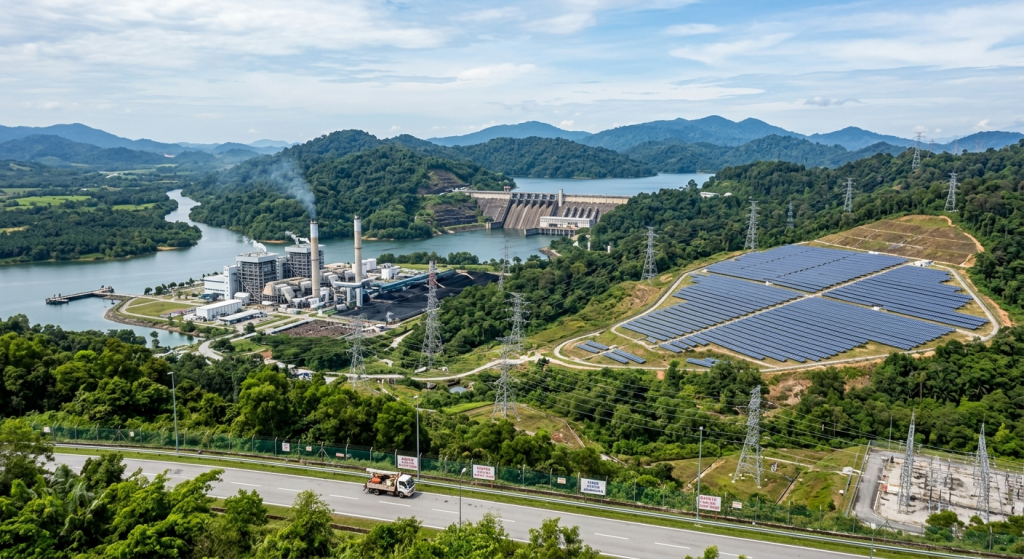
Malaysia’s power utilities sector is going through one of the most consequential shifts in its history. Data centre growth, national decarbonisation targets, and regional grid integration under ASEAN are reshaping how electricity is generated, transmitted, priced, and regulated. For engineers, planners, and commercial teams working in this space, technical currency is no longer optional. Below are ten training courses that are seeing strong demand from Malaysian power sector professionals right now, along with the market forces driving that demand.
1. HV & MV Power System – Design, Protection & Coordination
Malaysia’s peak electricity demand in Peninsular Malaysia is projected to grow from 21.3 GW in 2026 to 33.5 GW by 2035, driven largely by data centre and commercial load growth. That kind of expansion puts enormous pressure on transmission and distribution networks, making protection coordination and system design skills essential. EnergyEdge’s HV & MV Power System – Design, Protection & Coordination course, available through its Kuala Lumpur schedule, addresses exactly this need, covering design, protection, and coordination for utility and industrial networks.
2. HVDC Systems Engineering – Principles, Features, Design & Operations
As Malaysia builds new gas-fired and renewable capacity while pursuing regional interconnection under the ASEAN Power Grid, high voltage direct current transmission is becoming more relevant for long-distance and cross-border power transfer. EnergyEdge’s HVDC Systems Engineering – Principles, Features, Design & Operations course equips professionals with the principles, design considerations, and operational knowledge needed to work with this technology.
3. Battery Energy Storage Systems (BESS)
With Large Scale Solar programmes such as LSS5 and LSS5+ targeting 4 GW of new capacity in Peninsular Malaysia, and with data centre operators increasingly asked to firm up their own supply, storage has moved from a niche topic to a core capability requirement. EnergyEdge’s Design, Implementation, and Operations of Battery Energy Storage Systems (BESS) course covers design fundamentals, safety, commissioning, and grid integration, catering to engineers moving from conventional generation into storage as well as project and HSE teams managing these systems.
4. Advanced Microgrids Design, Standards and Modelling
The government is actively encouraging data centres to generate their own electricity to ease pressure on the national grid, alongside broader efforts to strengthen supply resilience. This trend is fuelling interest in microgrid design and modelling. EnergyEdge’s Advanced Microgrids Design, Standards and Modeling course covers design standards and modelling approaches relevant to organisations pursuing self-generation or distributed energy strategies.
5. Electricity Trading and Power Purchase Agreements
Malaysia’s power market is becoming more commercially complex, with rising numbers of corporate power purchase agreements, dedicated data centre supply arrangements, and ongoing deregulation across Asia-Pacific electricity markets. EnergyEdge’s Electricity Trading course, part of its Power Transmission & Distribution portfolio, builds capability in how these agreements are structured and how they support renewable energy growth.
6. Renewable Energy Skills Development (Solar PV, Interconnection and Asset Performance)
Malaysia’s National Energy Transition Roadmap (NETR) targets 70 percent renewable generation capacity by 2050, and Budget 2026 has backed this with billions in ringgit for solar and transition projects. Delivering on this ambition requires practical capability in solar PV systems, interconnection, controls, protection, and commissioning, not just policy awareness. EnergyEdge’s Renewable Energy Training Courses are built around this applied, delivery-focused capability gap.
7. Carbon Capture, Utilisation and Storage (CCUS)
Malaysia’s carbon tax, expected to launch in 2026 targeting the iron, steel, and energy sectors first, together with the national carbon market policy and an evolving climate change bill, is placing decarbonisation squarely on the agenda for power generators. EnergyEdge’s Carbon Capture, Utilisation and Storage (CCS/CCUS) Training Courses support professionals in understanding the technical and regulatory dimensions of this fast-developing area.
8. ESG and Sustainability for the Energy Sector
As carbon pricing, mandatory disclosure expectations, and investor scrutiny increase across the region, power utility organisations need staff who understand ESG frameworks in an energy-specific context. EnergyEdge’s ESG Reporting Frameworks & Industry Best Practices course is designed to build this capability directly into technical and commercial teams rather than treating it as a separate compliance function.
9. Combined Cycle Gas Turbine and Power Generation Fundamentals
With no new coal-fired plants planned and gas-fired generation confirmed as the key swing capacity for meeting rising demand, including new combined-cycle gas turbine projects awarded under the NewGen25 programme, power generation training remains firmly in demand. EnergyEdge’s Combined Cycle Gas Turbine Performance course covers the operational and engineering fundamentals needed to support this new wave of gas capacity while managing emissions performance.
10. Smart Grid and Renewable Resource Integration
Rising renewable penetration, growing distributed generation, and tighter grid stability margins mean utilities need staff who understand how power electronics, renewables, and digital controls interact within a modern grid. EnergyEdge’s Smart Grid, Smart Metering and Power Quality Analytics course addresses this, drawing on experience delivered across Malaysia, Thailand, Indonesia, and other regional markets.
Why These Courses Are in Demand Right Now Three forces are converging to drive this training demand. First, data centre growth is structurally changing Malaysia’s electricity consumption profile, with data centre demand expected to rise from around 7 percent of total electricity use in 2026 to roughly 31 percent by 2035. Second, sustainability requirements under the NETR, the national carbon market policy, and the incoming carbon tax are pushing generators and industrial users toward lower emission operations and credible ESG reporting. Third, Malaysia’s participation in ASEAN energy cooperation, including the newly launched APAEC 2026 to 2030 action plan and the ASEAN Power Grid initiative, is raising the bar for interconnection, market design, and cross-border trading knowledge. Together, these trends mean that technical, commercial, and sustainability skills increasingly need to be built in parallel rather than treated as separate tracks
Frequently Asked Questions
Data centres are projected to consume a much larger share of national electricity by the mid-2030s, driving record peak demand and requiring new skills in grid stability, protection, and self-generation such as microgrids and BESS.
With the carbon tax targeting the energy sector from its early phases, utilities and generators are prioritising training in CCUS, ESG, and emissions-related compliance to prepare for the added cost and reporting obligations.
The NETR’s 70 percent renewable energy target by 2050 is pushing organisations toward applied training in solar PV, storage, grid integration, and asset performance rather than general awareness-level content.
Programmes like the ASEAN Power Grid and APAEC 2026 to 2030 are increasing the need for skills in cross-border interconnection, HVDC transmission, and regional electricity trading and market structures.
Yes. Many of these courses, particularly in ESG, electricity trading, and renewable integration, are designed for commercial, project management, and HSE professionals who now need to understand power sector technical and regulatory context as part of their roles.
