| Code | Date | Format | Currency | Team of 10 Per Person* |
Team of 7 Per Person* |
Early Bird Fee Per Person |
Normal Fee Per Person |
|---|---|---|---|---|---|---|---|
| PE2281 | 25 - 27 Nov 2026 | Kuala Lumpur, Malaysia | SGD | 3,611 | 3,779 | 3,999 | 4,199 |
| PE2281 | 25 - 27 Nov 2026 | Kuala Lumpur, Malaysia | USD | 2,837 | 2,969 | 3,099 | 3,299 |
| PE2282 | 24 - 26 Mar 2027 | Kuala Lumpur, Malaysia | SGD | 3,611 | 3,779 | 3,999 | 4,199 |
| PE2282 | 24 - 26 Mar 2027 | Kuala Lumpur, Malaysia | USD | 2,837 | 2,969 | 3,099 | 3,299 |
*Fee per person in a team of 7 or 10 participating from the same organisation, registering 6 weeks before the course dateRequest for a quote if you have different team sizes, content customisation, alternative dates or course timing requirements Request for in-person classroom training or online (VILT) training format
Learn in teams and save more! Enjoy group discounts of up to 50% off normal fees for team based learning. Contact us on [email protected] to learn more today!
Code
PE2281Date
25 - 27 Nov 2026Format
Kuala Lumpur, MalaysiaCurrency
SGDTeam of 10
Per Person*
3,611
Team of 7
Per Person*
3,779
Early Bird Fee
Per Person
3,999
Normal Fee
Per Person
4,199
Code
PE2281Date
25 - 27 Nov 2026Format
Kuala Lumpur, MalaysiaCurrency
USDTeam of 10
Per Person*
2,837
Team of 7
Per Person*
2,969
Early Bird Fee
Per Person
3,099
Normal Fee
Per Person
3,299
Code
PE2282Date
24 - 26 Mar 2027Format
Kuala Lumpur, MalaysiaCurrency
SGDTeam of 10
Per Person*
3,611
Team of 7
Per Person*
3,779
Early Bird Fee
Per Person
3,999
Normal Fee
Per Person
4,199
Code
PE2282Date
24 - 26 Mar 2027Format
Kuala Lumpur, MalaysiaCurrency
USDTeam of 10
Per Person*
2,837
Team of 7
Per Person*
2,969
Early Bird Fee
Per Person
3,099
Normal Fee
Per Person
3,299
*Fee per person in a team of 7 or 10 participating from the same organisation, registering 6 weeks before the course dateRequest for a quote if you have different team sizes, content customisation, alternative dates or course timing requirements Request for in-person classroom training or online (VILT) training format
About this Training Course
CO₂ Shipping and LCO₂ Carriers are becoming vital parts of the carbon capture and storage value chain. As global decarbonisation accelerates, carbon capture and storage (CCS) is transitioning from pilot-scale projects to large-scale deployment, with global capacity expected to grow significantly over the next decade. Governments and industries across Europe, North America, and Asia-Pacific are committing to ambitious net-zero targets, driving strong demand for reliable CO₂ transport solutions. In this evolving landscape, CO₂ shipping is emerging as a flexible and scalable alternative to pipelines, particularly for regions with dispersed emitters and limited fixed infrastructure. This is especially relevant in Asia, where industrial clusters are fragmented and storage sites are often located offshore or across borders.
As carbon capture and storage (CCS) scales globally, CO₂ transport is emerging as a critical enabler. Shipping plays a key role in connecting dispersed emitters to storage locations. This 3-day comprehensive training course provides an understanding of CO₂ shipping and LCO₂ carriers, focusing on system-level integration, economics, infrastructure requirements, and real-world deployment considerations, based on cross-project benchmarking.
Aligned with current market trends and project developments, the course addresses key technical and commercial challenges, including CO₂ properties, conditioning requirements, shipping economics, and infrastructure design. Participants will explore trade-offs between shipping and pipeline transport, assess cost drivers such as CAPEX and OPEX, and evaluate logistics, fleet utilisation, and terminal operations. Participants will examine regulatory frameworks, commercial models, and regional deployment constraints, providing a holistic view of the CCS value chain. Through real-world case studies and scenario-based analysis, participants will gain practical insights to support decision-making in CO₂ transport and carbon management strategies.
By the end of the course, participants will be able to:
- Understand and explain CO₂ shipping within the CCS value chain
- Evaluate shipping versus pipeline transport across different scenarios
- Analyse cost drivers, CAPEX and OPEX structures
- Assess system-level constraints including volume, distance and infrastructure
- Interpret regulatory frameworks and market drivers
- Value the integration between capture, transport and storage systems
- Shipowners and Operators responsible for fleet strategy, vessel investment decisions, and operational performance.
- Marine Engineers and Technical Managers assessing technical requirements for CO₂ handling, storage conditions, and integration of liquefaction and cargo containment systems.
- Decarbonisation and Sustainability Managers evaluating CO₂ shipping to meet regulatory targets and net-zero commitments.
- Project Managers in Maritime and Energy sectors managing end-to-end project delivery and transport infrastructure.
- Policy and Regulatory Professionals developing and interpret regulations related to CCS, maritime transport, and carbon accounting.
- Consultants and Advisors supporting feasibility studies, cost modelling, and decision-making for CO₂ transport and storage projects.
- Engineering, Procurement and Construction (EPC) professionals designing and deliver infrastructure including CO₂ carriers, terminals, and storage facilities.
- Oil and Gas operators transitioning into CO₂ transport and storage (T&S) and carbon management services.
- CO₂ transport and storage developers planning and operate integrated T&S networks, including pipelines, shipping fleets, and storage sites.
- Port authorities and infrastructure developers enabling CO₂ handling, storage and logistics.
- Classification societies and verification bodies supporting certification and compliance frameworks.
- Basic
- Intermediate
The training is delivered through a structured and highly interactive approach that combines both technical depth and commercial relevance. It includes instructor-led lectures to provide a solid foundation of key concepts, complemented by real-world case studies derived from cross-project benchmarking to illustrate practical applications. Participants will engage in interactive group discussions to apply concepts to realistic industry scenarios, alongside scenario modelling sessions that enable real-time evaluation of economic outcomes and system trade-offs. Quantitative exercises are incorporated to strengthen understanding of cost structures and decision variables, while open discussions and Q&A sessions ensure clarity, knowledge exchange, and alignment with participants’ specific operational challenges.
Unlock the potential of your workforce with customized in-house training programs designed specifically for the energy sector. Our tailored, in-house courses not only enhance employee skills and engagement but also offer significant cost savings by eliminating travel expenses. Invest in your team’s success and achieve specific outcomes aligned with your organization’s goals through our expert training solutions. Request for further information regarding our on-site or in-house training opportunities.
In our ongoing commitment to sustainability and environmental responsibility, we will no longer providing hard copy training materials. Instead, all training content and resources will be delivered in digital format. Inspired by the oil and energy industry’s best practices, we are leveraging on digital technologies to reduce waste, lower our carbon emissions, ensuring our training content is always up-to-date and accessible. Click here to learn more.



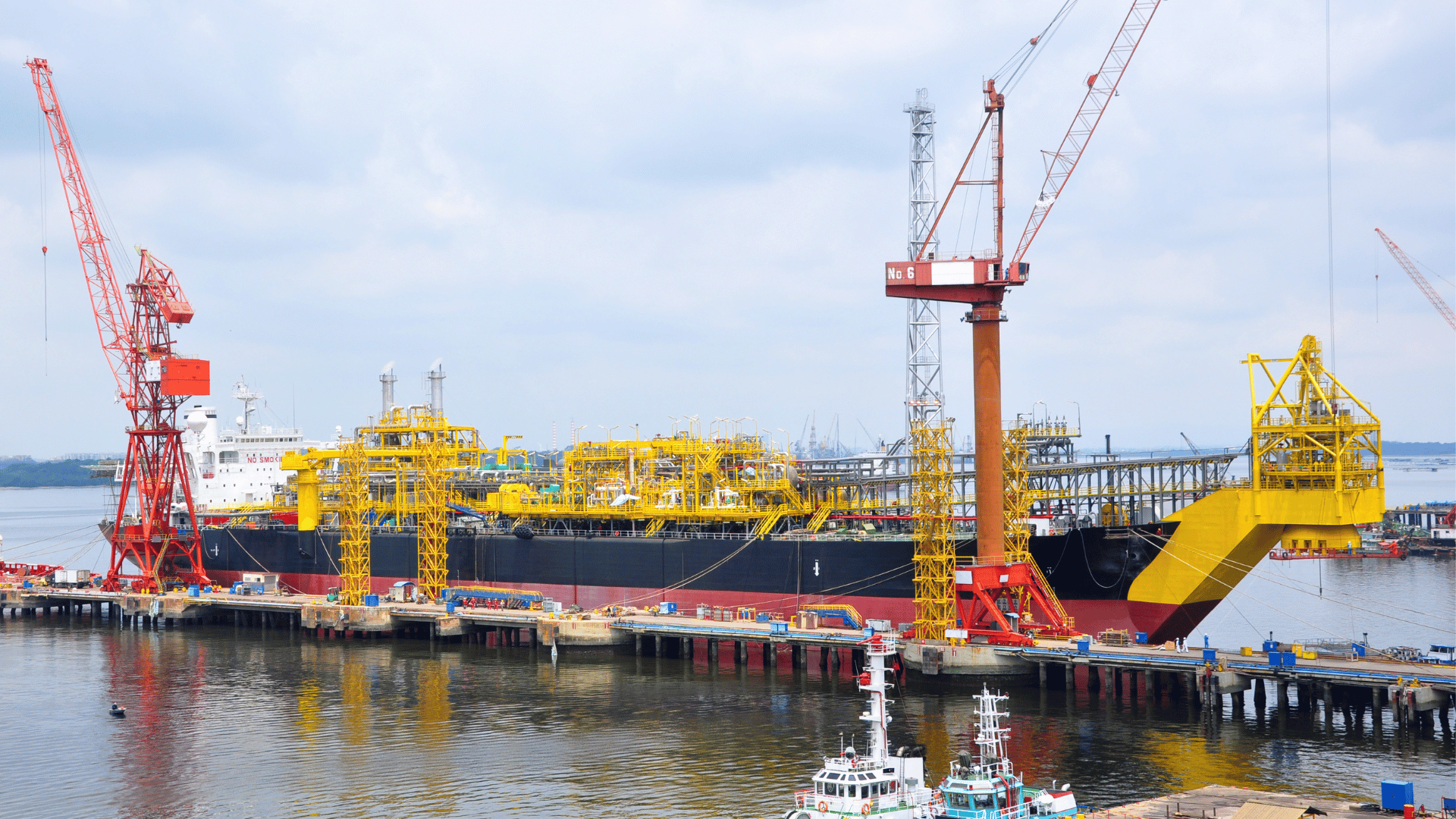
CO₂ shipping is the transport of captured carbon dioxide by ship. The CO₂ is cooled and stored as liquid CO₂ during transport. This method helps move CO₂ from industrial plants to storage sites. It is useful when pipelines are not available or are too costly.
LCO₂ carriers support carbon capture and storage projects. They help connect emitters with offshore or cross-border storage sites. They also support regions with scattered industrial plants. CO₂ shipping gives CCS projects more flexibility and easier expansion.
CO₂ shipping is more flexible than pipelines. Ships can serve different routes and storage sites. This works well for smaller or spread-out emitters. Pipelines may still be better for large and steady CO₂ volumes over short distances. The best option depends on cost, scale, and location.
CO₂ shipping needs capture plants, liquefaction systems, storage tanks, ports, and vessels. Ports also need loading and offloading systems for liquid CO₂. Storage sites must support injection and long-term monitoring. Good links between all systems are important for smooth operations.
CO₂ shipping projects face technical and commercial challenges. High costs and limited storage sites are major issues. Operators must also manage CO₂ pressure, temperature, and purity during transport. Port delays and weak logistics can also increase operating costs.
Regulations affect ship safety, carbon tracking, and cross-border CO₂ transport. Clear rules help reduce project risk and support investment. International standards also improve reporting, storage management, and operational safety across CCS projects.
CO₂ Shipping and LCO₂ Carriers are expected to grow as CCS projects expand worldwide. Future projects may use larger ships and shared storage hubs. Better port systems and stronger regulations may also improve efficiency and reduce transport costs.
Related Courses