
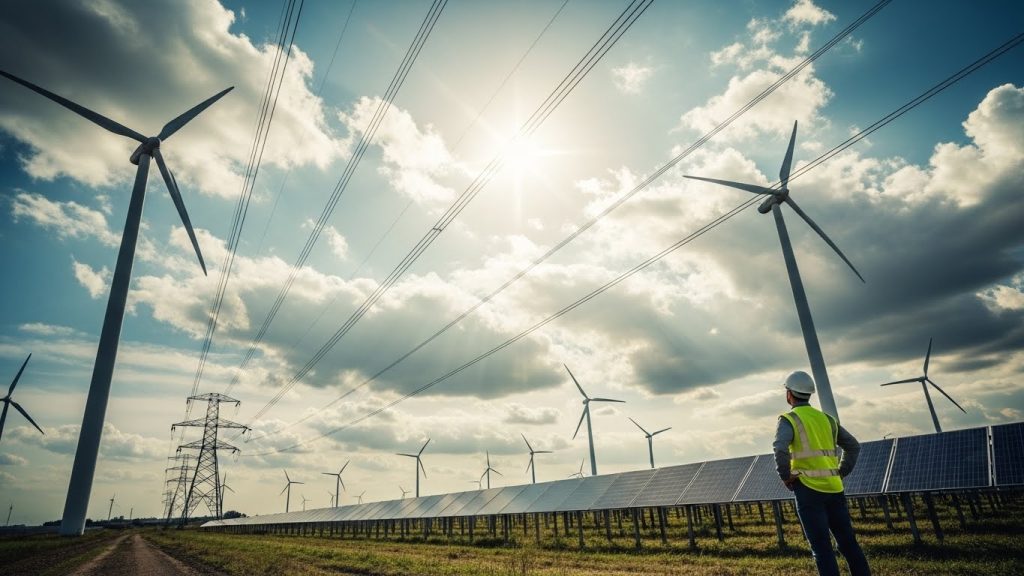
The global energy landscape is undergoing a tectonic shift. For over a century, the industrialized world relied on a centralized model of power generation: massive coal, gas, and nuclear plants pushing electricity out through a one-way transmission system to passive consumers. Today, driven by the urgency of climate change and the plummeting costs of solar and wind technologies, we are racing toward a future powered by renewables.
However, simply building wind turbines and solar panels is only half the battle. The more difficult, often underappreciated challenge is grid integration, the physical and digital re-engineering required to accommodate energy sources that are inherently variable, decentralized, and asynchronous.
Integrating renewable energy into the grid is not merely a plug-and-play operation; it is akin to rebuilding an airplane while flying it. It requires a fundamental overhaul of infrastructure, market mechanisms, and grid operation protocols.
I. The Clash of Architectures: Old vs. New
To understand the challenge, one must first understand the legacy grid. The 20th-century grid was designed for dispatchable generation. Grid operators could control the output of a coal or hydro plant with precision. If demand spiked (for example, when everyone turned on their lights in the evening), operators simply burned more fuel. The flow of electricity was linear: from the large plant, through high-voltage transmission lines, down to distribution networks, and finally to the home.
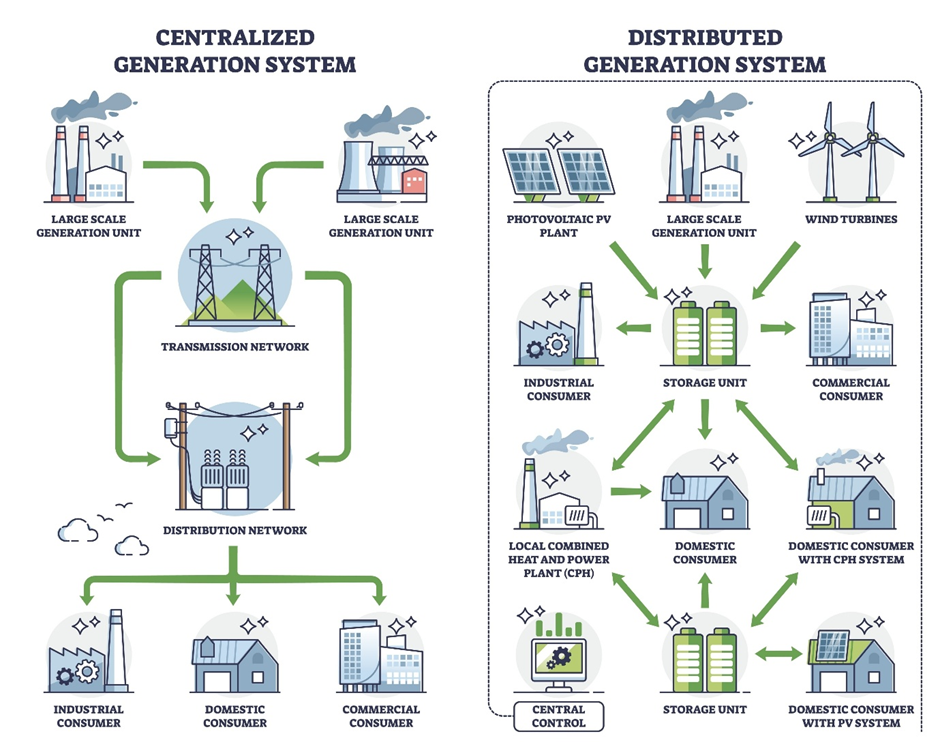
Renewable energy, specifically Variable Renewable Energy (VRE) like wind and solar, flips this model on its head.
- Variability: VRE is weather-dependent. The grid requires supply and demand to balance perfectly every second. If a cloud passes over a solar farm, generation drops instantly.
- Decentralization: Instead of a few dozen massive plants, the new grid is fed by millions of endpoints—including rooftop solar panels, community wind projects, and battery storage systems.
- Two-Way Flow: Consumers are becoming “prosumers,” generating their own power and selling excess back to the grid. This creates a bidirectional flow of electrons that legacy transformers and safety systems were never designed to handle.
II. The Technical Hurdles
As renewable penetration increases, moving from 10% to 50% and eventually towards 100%, specific technical limitations in the grid become acute.
1. The Inertia Problem
This is perhaps the most technical yet critical aspect of integration. Traditional thermal power plants use massive spinning turbines. These heavy, rotating masses provide physical inertia. If a disruption occurs on the grid (like a power line failing), the momentum of these spinning turbines acts as a shock absorber, giving grid operators precious seconds to stabilize the frequency (usually 50Hz or 60Hz).
Solar panels and wind turbines are connected to the grid via inverters (power electronics).They do not inherently provide this physical inertia. A grid dominated by inverters is “light” and fragile; a small disturbance can cause rapid frequency drops, potentially leading to blackouts. Solving this requires “synthetic inertia”—using advanced software in inverters to mimic the behavior of a spinning turbine.
2. The “Duck Curve” and Ramping
In regions with high solar penetration, like California or South Australia, grid operators face the “Duck Curve.”
- Mid-day: Solar generation peaks, flooding the grid. Net demand from conventional plants drops near zero (the belly of the duck).
- Sunset: Solar generation vanishes just as people return home and turn on appliances.
- The Ramp: Conventional plants must ramp up power violently fast, sometimes gigawatts in minutes to fill the gap. This places immense thermal stress on traditional infrastructure and increases the risk of instability.
3. Transmission Congestion
The best renewable resources are rarely located near population centers. The strongest winds sweep across remote plains or offshore waters; the most intense sun beats down on unpopulated deserts. Transporting this power to cities requires massive expansion of High Voltage transmission lines. However, permitting delays and “NIMBY” (Not In My Backyard) opposition often stall these projects for years, leaving renewable energy “stranded” or curtailed (wasted) because the wires are too congested to carry it.
III. The Toolbox: Solutions for a Resilient Grid
Integrating high levels of renewables requires a “Smart Grid” ecosystem that combines hardware upgrades with digital intelligence.
Energy Storage: The Holy Grail
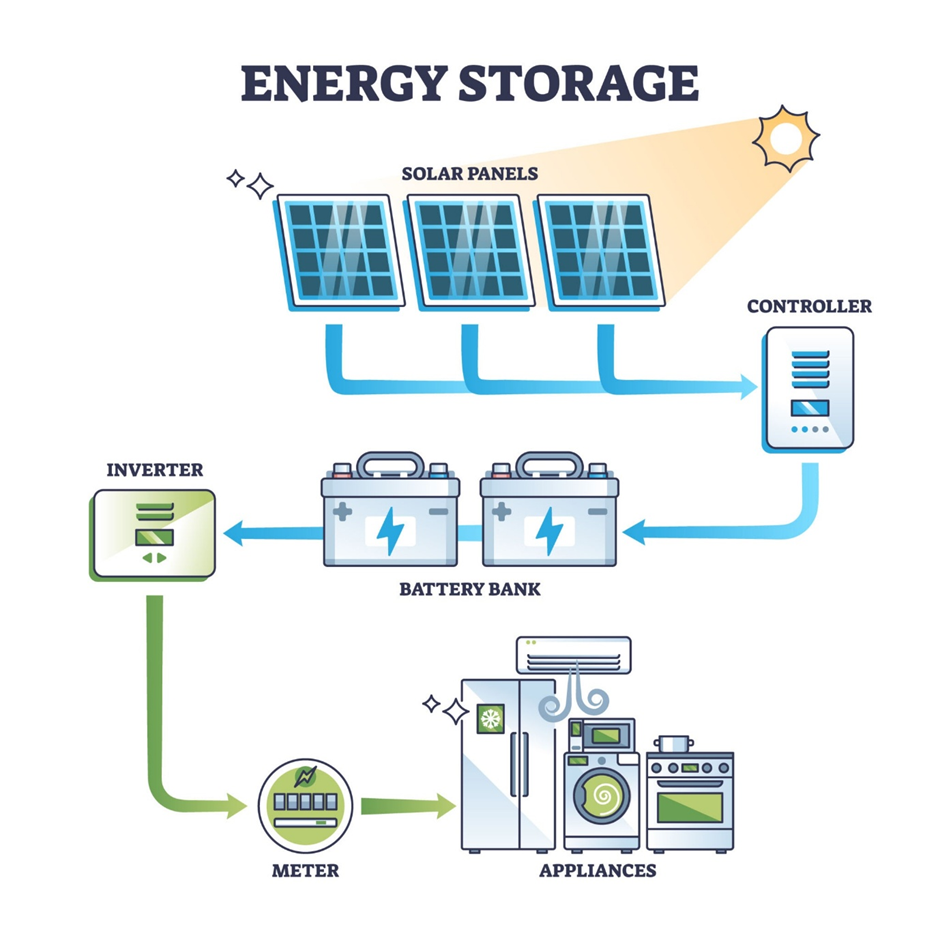
Storage is the bridge between variable supply and rigid demand. It allows us to save the noon sun for the evening peak.
- Lithium-Ion Batteries: Currently the dominant technology for short-duration storage (1–4 hours). They are excellent for frequency regulation and smoothing out momentary clouds.
- Pumped Hydro: The grandfather of storage. Water is pumped uphill when energy is cheap and released downhill through turbines when energy is needed. It accounts for over 90% of global storage capacity but is limited by geography.
- Long-Duration Storage: To reach 100% renewables, we need to store energy for days or weeks (for reliable power during a “dunkelflaute”—a dark, windless period).Emerging technologies like Green Hydrogen, flow batteries, and compressed air energy storage are vying to fill this gap.
Expanding Transmission: HVDC
High Voltage Direct Current (HVDC) technology is vital for the modern grid. Unlike traditional Alternating Current (AC), HVDC loses significantly less energy over long distances and can connect asynchronous grids (grids operating at different frequencies).
Supergrids, continental-scale transmission networks, are being proposed to balance weather patterns. For instance, when it is cloudy in Germany, it might be windy in Scotland or sunny in Spain. A robust interconnection allows these regions to balance each other out.
Demand Response and Flexibility
Instead of just adjusting supply to meet demand, we must now adjust demand to meet supply. This is called Demand Response.
Example: Through smart thermostats and IoT devices, a utility could slightly lower the heating in a million homes by one degree for 15 minutes to reduce grid stress, or signal Electric Vehicles (EVs) to charge only when wind energy is peaking at night.
This flexibility turns the demand side of the equation into a virtual battery, absorbing excess renewable energy and reducing the load during peak times.
IV. The Role of Digitalization and AI
The new grid is too complex for humans to manage alone. With millions of distributed assets (solar panels, EVs, batteries), we need Artificial Intelligence (AI) and Machine Learning.
- Forecasting: AI algorithms analyze satellite imagery and weather data to predict wind speeds and cloud cover with hyper-accuracy, allowing grid operators to anticipate generation dips minutes or hours in advance.
- grid-Forming Inverters: Advanced software allows renewable sources to restart the grid after a blackout (black start capability) and maintain voltage stability, tasks previously reserved for fossil fuel plants.
- Virtual Power Plants (VPPs): Software aggregates thousands of small home batteries and solar arrays, controlling them as a single entity. To the grid operator, this VPP looks and acts like a traditional power plant, capable of buying and selling energy on the wholesale market.
V. Economic and Policy Frameworks
Technology is often ahead of regulation. To fully integrate renewables, market designs must evolve.
- Capacity Markets: In a renewable grid, gas plants run less often but are still needed as backups. Markets must pay these plants for their “capacity” (availability) rather than just the energy they generate, ensuring they remain solvent until long-duration storage makes them obsolete.
- Real-Time Pricing: Consumer electricity prices are often fixed, shielding users from the reality of supply and demand. Moving toward real-time or Time-of-Use (TOU) pricing incentivizes consumers to shift usage to times when renewable energy is abundant and cheap.
- Interconnection Reform: In many jurisdictions, the queue to connect new solar or wind projects to the grid is years long. Streamlining the permitting and study process is a policy imperative.
VI. The Future Outlook
The transition to a renewable-integrated grid is an inevitability, but the path is non-linear. We are moving toward a hybrid system.
In the near term, we will see a “smartification” of the existing grid: more sensors, better software, and the widespread deployment of short-duration batteries. We will see the retirement of “baseload” as a concept, replaced by “flexible load.”
In the long term, the grid will likely evolve into a “system of systems”, a network of autonomous microgrids that can operate independently during emergencies but share resources during normal operations. This cellular structure mimics the internet (distributed and resilient) rather than the broadcast model of the 20th century.
Conclusion
Integrating renewable energy into the grid is a monumental engineering feat, comparable to the construction of the interstate highway system or the internet infrastructure. It requires us to overcome the laws of physics regarding inertia and frequency, the constraints of geography regarding transmission, and the inertia of human habits regarding energy consumption. However, the solutions, from HVDC superhighways to AI-driven virtual power plants are already here. The grid of the future will not just be cleaner; it will be more intelligent, more resilient, and more democratic. The challenge is no longer “if” we can integrate renewables, but how fast we can deploy the infrastructure to support them.
Frequently Asked Questions (FAQ) regarding Renewable Grid Integration
This is known as the “intermittency” challenge. Grid operators handle this through a combination of solutions:
– Geographic Diversity: Connecting grids over large areas so that wind blowing in one region compensates for calm weather in another.
– Energy Storage: Using batteries or pumped hydro to store excess power generated during peak times for use later.
– Backup Generation: Keeping flexible gas plants or other dispatchable sources on standby to fill immediate gaps until long-duration storage becomes more widespread.
Not necessarily. While renewables introduce variability, modern power electronics and forecasting software allow for incredibly precise control. In fact, because renewable generation is distributed (spread out) rather than centralized, the grid can be more resilient to physical attacks or localized storms than a grid reliant on a few massive, single points of failure.
The concept of “baseload” (plants that run 24/7 at a steady rate) is becoming outdated. The modern grid prioritizes flexibility over baseload. While nuclear offers valuable carbon-free steady power, the grid is moving toward a model where variable renewables provide the bulk of energy, supported by flexible resources (batteries, hydro, demand response) that ramp up and down as needed.
If everyone plugged in their EV at 6:00 PM when they got home, it would crash the grid. However, with “Smart Charging,” EVs can actually help the grid. Utilities can signal chargers to run overnight when demand is low and wind energy is often high. In the future, Vehicle-to-Grid (V2G) technology will allow EVs to push power back to the grid during emergencies, acting as massive mobile batteries.
This is called curtailment. It happens when solar or wind farms generate more electricity than the grid can use or transport at that specific moment. If transmission lines are congested (full), operators must tell wind farms to turn off their turbines to prevent overloading the wires. The solution is building more transmission lines and adding more storage to capture that “wasted” energy.
Surprisingly, for most standard systems, the answer is no. Standard grid-tied inverters are designed to shut down immediately if the grid goes down. This is a safety feature (anti-islanding) to stop your panels from sending electricity back into the lines and electrocuting workers fixing the outage. To have power during a blackout, you need a specialized system with battery storage and an “island mode” switch.
The upfront capital cost of building new transmission lines, batteries, and wind farms is high. However, the operational cost of wind and solar is near zero (sunlight and wind are free). Over time, this lowers the wholesale cost of electricity. Most economic models suggest that while the investment phase is costly, a fully renewable grid will eventually be cheaper to run than a fossil-fuel-dependent one.
The Duck Curve is a graph shape that shows the timing imbalance between solar generation and electricity demand. During the day, solar floods the grid, pushing the demand for other power sources very low (the “belly” of the duck). At sunset, solar disappears just as home energy usage spikes, creating a steep “neck” that requires other power plants to ramp up incredibly fast.
Batteries do more than just store bulk energy. They provide “ancillary services.” Because batteries have no moving parts, they can respond in milliseconds to changes in grid frequency. If the frequency drops, a battery can inject power instantly to stabilize it, much faster than a gas or coal plant could ramp up.
While technology is a hurdle, the biggest barriers are often regulatory and infrastructural. Permitting new transmission lines can take 10 years due to land-use disputes. Additionally, market rules written decades ago for fossil fuel plants often don’t fairly compensate batteries or demand-response systems for the services they provide.
