
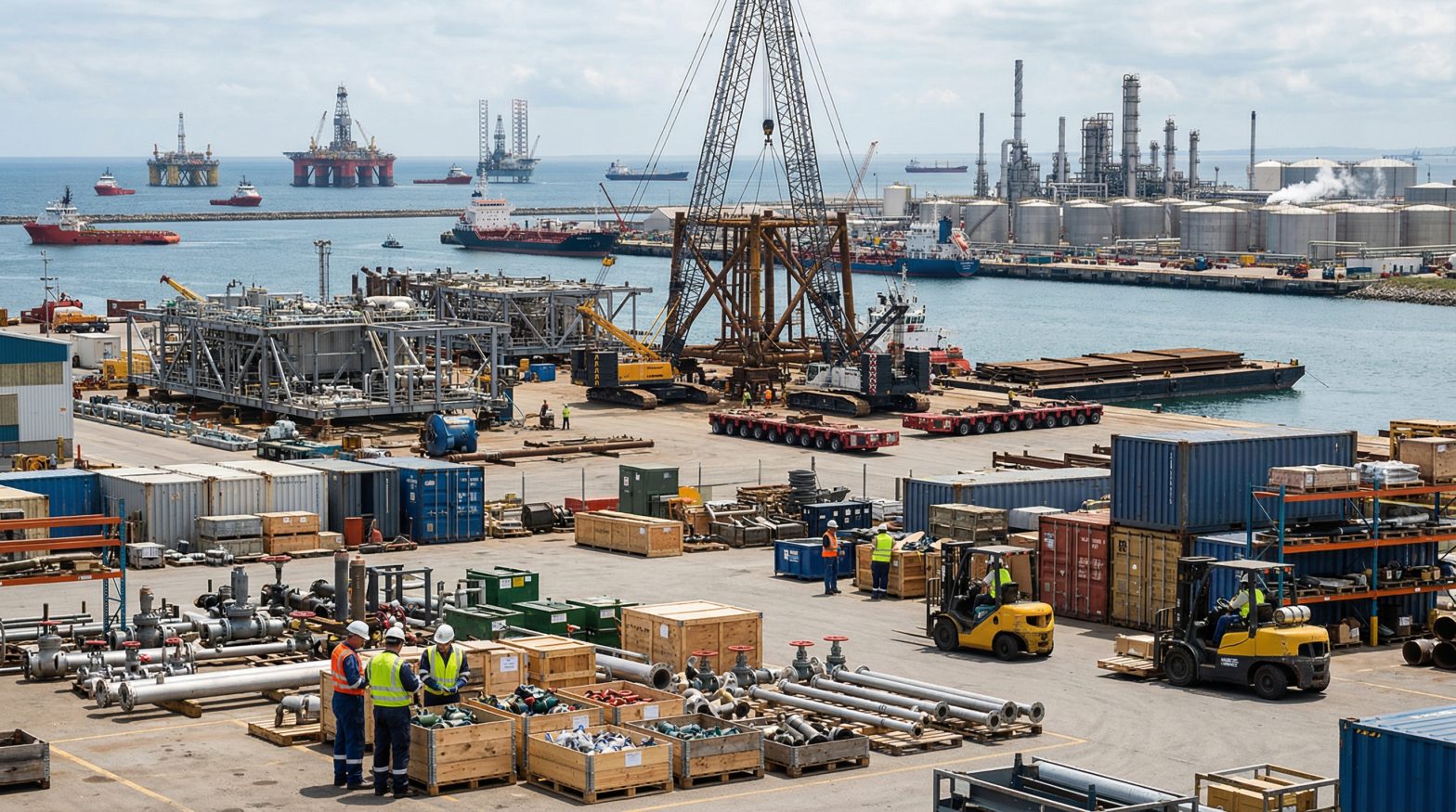
The oil and gas supply chain is under growing pressure from unstable lead times, uneven supplier capacity, labour shortages and rising regulatory demands, with knock-on effects for project delivery, maintenance planning, plant reliability and execution across upstream, midstream and downstream operations. More importantly, many of the biggest risks now come from internal capability gaps, including weak planning discipline, delayed procurement, fragmented data and poor coordination between engineering, procurement, logistics and operations. As a result, procurement and logistics in oil and gas, supply chain training and stronger cross-functional execution are becoming critical to resilience, delivery performance and long-term competitiveness across the wider energy supply chain.
Category Archives: Uncategorized
Andaman Sea – What’s Happening?

Conversations, that is the first thing we think about when looking at this issue of the magazine. Around 50 people contributed to it, and many of those we spoke to personally over the phone or on Teams. Sometimes just for a little insight on a particular technical issue, and sometimes to hear about an entire career.
Optimizing Risk & Volume Assessments in Mixed Hydrocarbon Fields

In many basins there are hydrocarbon fields containing both oil and gas. Often with a wide range of relative amounts of gas and oil: from only oil to only gas, and every conceivable gas-oil mix in between these two endmembers.
How should we do Risk & Volume Assessment of prospects in those settings?
Exploring Stratigraphic and Combination Traps: Definitions, Risks, and Applications

Petroleum traps are normally classified as structural traps or stratigraphic traps, and sometimes the somewhat confusing term ‘combination trap’ is used. The difference between structural and stratigraphic traps seems easy enough: Definitions of combination traps usually state that these are traps with both a structural and a stratigraphic component. That is a bit confusing. Most […]
Data Acquisition for Exploration: Risk Reduction or POS Polarisation?

Acquiring additional data in a basin (for example seismic acquisition or reprocessing) tends to be a costly and time-consuming affair. In many cases data acquisition programmes are simply considered an essential pre-requisite for doing exploration. However, justification to carry out such work can also be based on Value of Information (VoI) assessments. Data acquisition for […]
Prospect Police versus the Socratic Method

Prospect Review Teams and prospect review sessions are not always very popular. Many explorers are dreading the moment when their prospects must be reviewed. Especially younger explorers may feel exposed and uncertain. Some explorers become rather defensive, and some review teams may be a bit harsh in their challenges and can be rather intimidating. What […]
The Bull’s Head Risk Matrix: A Data-Driven Approach to Risk Assessment
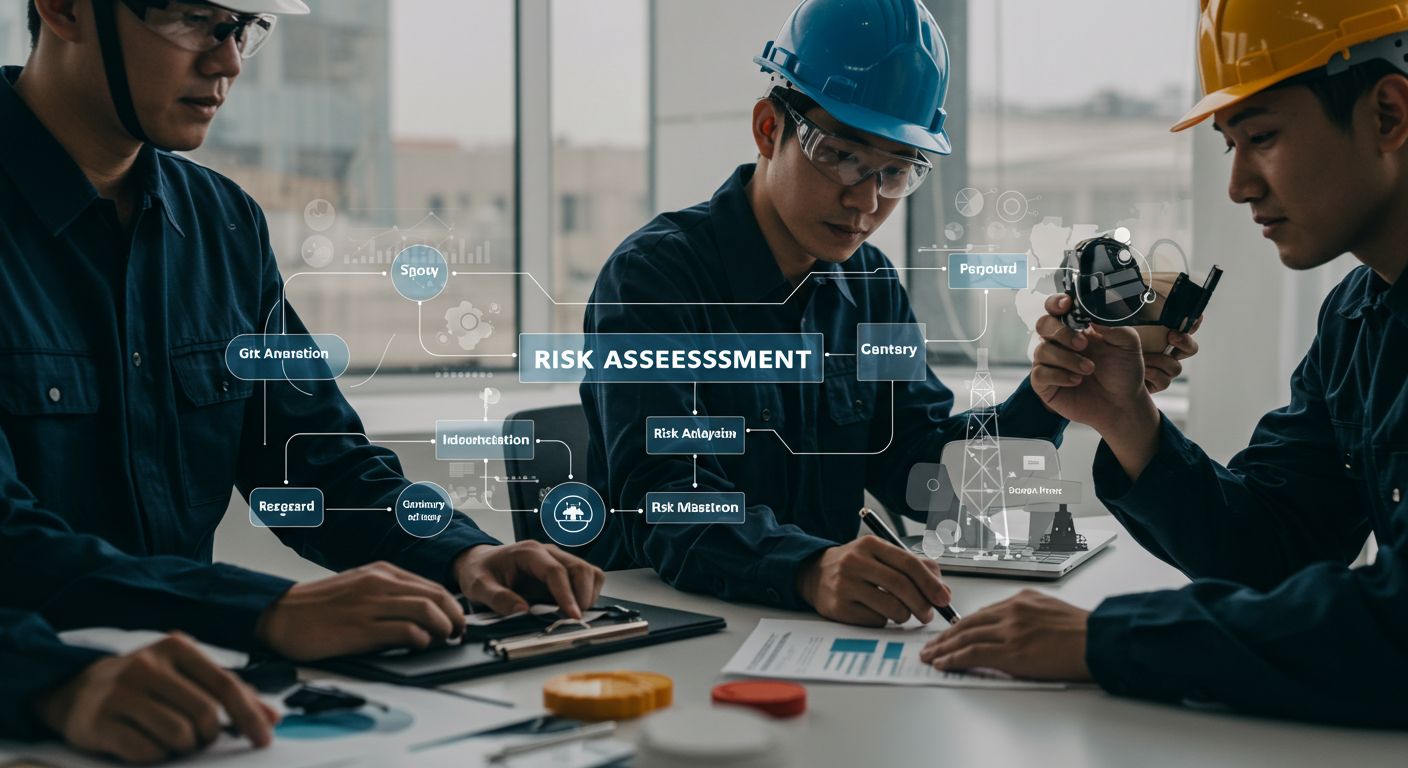
The Bull’s Head Risk Matrix is developed to assist risk assessment, which, by nature, is a subjective affair. The Risk Matrix forces us to base the assessment as much as possible on data, information and understanding, making the assessment as objective as possible. While the matrix was developed for oil and gas exploration, it can […]
Reporting Risk & Volume Assessments: Key Insights and Best Practices

How to understand and report Prospect Volumes The results of Risk & Volume assessments of prospects are often communicated by quoting the POS and the MSV. For example: The POS of the prospect is 45%, and the MSV is 14.7 million barrels of oil. It looks like this says that there is a chance of […]
Rethinking Trap Distribution Through Seal Effectiveness

Just like reservoirs also seals can be good, or not so good. There is a whole spectrum of lithologies from excellent reservoirs to excellent seals. In fact, most seals leak. Some leak very fast, and then the seal is not effective; others leak not so fast or maybe very slowly, even at geological timescales, and then the seal is effective.
SHALLOW GAS – FROM RISK TO RESOURCE

GeoExPro Vol. 21 Issue 6 Going global and embracing all forms of subsurface energy, that’s how we would characterize this issue of the magazine. For the first time, we introduce a section on coal geology, as we felt that this part of the energy mix is grossly underreported. And even though coal is mostly used […]
EnergyEdge Embraces Sustainability: Our Shift to Paperless Training

In an era where environmental consciousness is no longer optional but essential, businesses across all sectors are reevaluating their practices to reduce their ecological footprint. Today, we at EnergyEdge are excited to announce a significant step in our organization’s journey towards sustainability, our transition to paperless training materials. The Digital Revolution in Corporate Training As […]
Empower Your Career: Exploring Oil and Gas Industry Courses with Energy Edge

In the fast-paced world of oil and gas, staying ahead requires not only expertise but also continuous learning and adaptation. At Energy Edge, we understand the pivotal role that specialized training plays in shaping the success of professionals in the oil and gas industry. Our comprehensive Oil and Gas Industry Courses are designed to equip individuals with the knowledge, skills, and insights needed to thrive in this dynamic sector.
HRDF Training Grant in Malaysia: Empowering Workforce Development

The Human Resource Development Fund (HRDF) training grant in Malaysia plays a crucial role in enhancing the skills and competencies of the Malaysian workforce. This initiative, established under the Pembangunan Sumber Manusia Berhad Act 2001, aims to promote employee training and development across various industries. The HRDF, also known as HRD Corp, is a government […]
Oil and Gas Training in Singapore

In today’s evolving energy landscape, the oil and gas industry continues to play a vital role in meeting global energy needs. Despite changes in the sector, demand for skilled professionals remains strong. To stay competitive, individuals must build relevant skills through targeted training programs. In Singapore, the oil and gas sector remains an important contributor […]
The Role of Competency Management and Workforce Development in the Era of Energy Transition
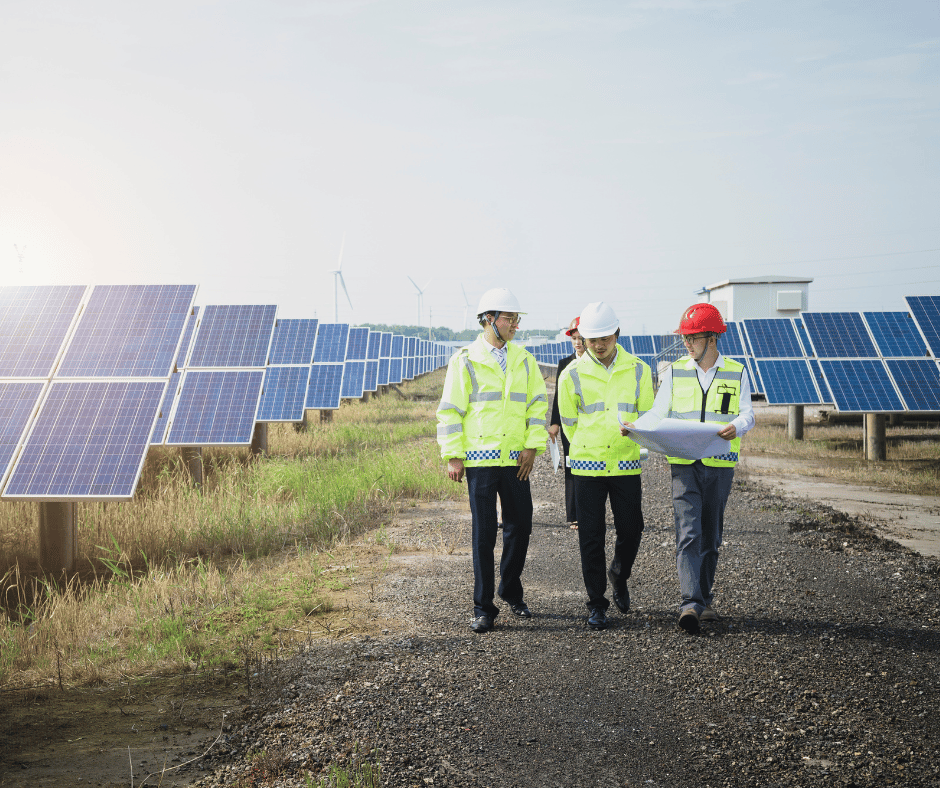
In the fast-changing energy industry, success depends on a strategic approach to workforce development and competency management. As the sector shifts toward renewable energy and sustainability goals, companies must adapt to new challenges and opportunities.